Show Don't Tell in Creative Writing
Show, Don't Tell — and When to Break the Rule
You've just spent a section learning to make dialogue sound like a specific, distinct human being — to trust your ear, to listen for what's true rather than what looks correct on the page. That same principle — experience over assertion, the particular over the general — is the foundation of one of writing's most crucial and most misunderstood rules.
Here's the thing about "show, don't tell": it's among the most repeated piece of writing advice in the English-speaking world, and it's also the most misunderstood. Beginning writers hear it and either panic (what does it mean to show?) or weaponize it (ruthlessly cutting every abstract word from their drafts). Neither response actually makes the prose better. Let's slow down and get this right, because the underlying principle is genuinely important — one of the most important ideas in all of craft — and the dogmatic version of the rule will actually make your writing worse.
The Power of Showing: What Actually Happens
Let me start with what showing looks like in practice. Say you want to convey that a character is nervous while waiting in a doctor's office. Here's what showing looks like:
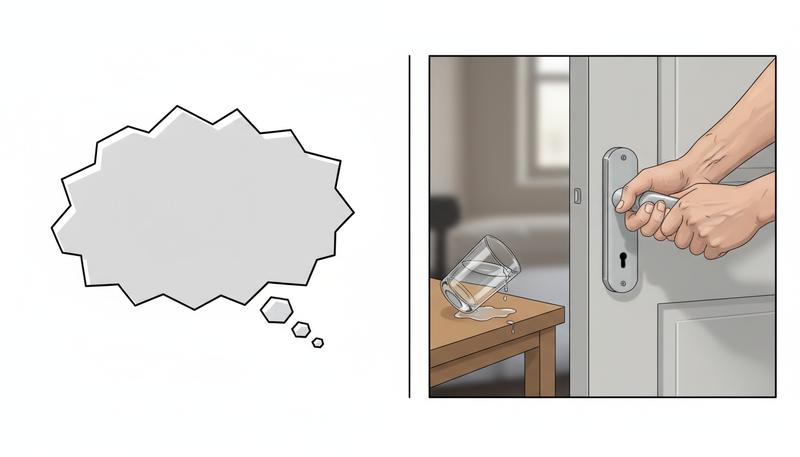
She arrived ten minutes early and sat in the molded plastic chair, one of those chairs designed to be uncomfortable. Picked up a magazine from 2019. Checked her phone — nothing. Put the magazine back and picked up another. Her knee bounced. She checked her phone again. Thirty seconds. She checked it again thirty seconds later. Clicked her pen three times, put it down, picked it up. When the receptionist finally called her name, she stood up too fast and knocked her coffee onto the chair.
No abstract emotion words. Just behavior. And yet we know exactly what's happening inside her — and we know something about her, specifically. The way she expresses nervousness tells us about her personality. The phone-checking, the pen-clicking, the small accident — that's a particular kind of nervous, slightly self-aware, maybe a little sheepish about it. That's the bonus power of showing: it reveals character at the same time.
The Specific Detail as the Basic Unit of Vivid Prose
Ask yourself what separates forgettable fiction from the fiction that stays with you for years. Usually, it's not the big plot moves or even the themes. It's the details. The specific, concrete, utterly particular details that could only exist in this story.
Consider the difference between these two sentences:
He drove an old car.
versus
He drove a rusted-out Ford F-150 with a "Honk If You Love Silence" bumper sticker that someone had half-peeled off.
The first sentence gives you a category. A car. Old. Fine. Noted. The second gives you a person — because the objects someone surrounds themselves with are never neutral. That half-peeled bumper sticker tells you about ambivalence. The contradiction of the slogan tells you about humor or jadedness. The rusted-out truck tells you about economics or practicality or stubbornness about replacing things. Specific details don't just paint pictures — they carry meaning and develop character simultaneously.
Chekhov's glint of light on broken glass works so well It gives you moonlight and it gives you broken glass, and both of those things together create a mood that neither word alone could create. That's the magic of the specific: it does more work per word than any abstraction can.
Remember: The specific detail is the basic unit of vivid prose. When your writing feels flat or generic, the diagnosis is almost always "not specific enough." Push past the category (car, house, emotion, weather) to the particular thing that could only exist here, now, in this story.
Rendering Emotion Without Naming It
Emotion is where the show/tell distinction matters most — and where beginners most reliably default to telling. It makes sense. You feel something. You want the reader to feel it. You write the word. "She was devastated." Done.
Except: you haven't made the reader feel anything. You've told them what to feel. Which is the opposite of what literature does.
Great fiction makes readers feel emotions by creating the conditions for those emotions to arise organically. This happens through physical sensation, behavior, and the specific concrete details that carry emotional charge — not through labeling.
Let's walk through a few of the big emotions:
Fear: Forget "she was terrified." Fear lives in the body. The dry mouth. The narrowing of the visual field. The bizarre fixation on irrelevant details. The way time seems to slow. The urge to make oneself smaller. A character who is truly afraid might notice, absurdly, that there's a water stain on the ceiling shaped like a dog — because fear does that to the brain. Write the behavior, the sensation, the perception, and the reader's own nervous system will respond.
Grief: "He was devastated by her death" is a sentence that vanishes the moment you read it. But: He found himself at the grocery store, reaching for her brand of cereal before he remembered. He put it back. Then picked it up again. He bought it. That's grief — the habitual motion of a life that hasn't caught up to the loss yet. No grief label needed.
Joy: Easy to over-sentimentalize. Instead of "she was flooded with happiness," watch what joy does to a body. The involuntary sound. The impulse to call someone. The inability to sit still. The world suddenly looking brighter — and here you can go specific: which thing in the world suddenly looks brighter? That's where the image lives.
Love: The most dangerous emotion to tell. "He loved her deeply" means absolutely nothing. But the moment where someone notices exactly how a person laughs, or the particular worn heel of a shoe, or the habit of checking the door is locked twice — that's love. It lives in attention. Show the noticing.
Before and After: Transforming Told Passages
Let me show you this transformation in action, at the level of a full paragraph.
Before (told):
Marcus was angry about what his brother had done. He'd always resented James, even as a kid. When he walked into the family reunion and saw him there, he felt like leaving immediately. But he stayed, because he was a responsible adult.
Competent. Clear. Completely dead on the page. We're getting a report. "Angry." "Resented." "Felt like leaving." Everything is labeled. Nothing is rendered.
After (shown):
Marcus spotted James across the yard before anyone else saw him arrive — James in his good blazer, already laughing at something their aunt had said. Marcus set his paper plate down on the picnic table. He went back to the car and stood there with his hand on the door handle for a moment, looking at his reflection in the window. Then he straightened his collar and went back to the reunion.
No "angry." No "resented." No "felt like leaving." And yet: we see the anger in the plate going down. We see the conflict in the door handle. We see the decision made in the collar straightening — a gesture of self-presentation, of choosing public face over private feeling. That's characterization through action. That's a human being.
Notice also that the "after" version is doing three things at once: showing us Marcus's emotional state, revealing his character (he stays — but not easily), and creating tension (what happened with James?). Showing is more efficient than it looks, because good concrete details are always doing multiple jobs simultaneously.
graph TD
    A[Telling: Label the emotion] --> B[Reader passively accepts fact]
    B --> C[No imaginative engagement]
    D[Showing: Render the behavior/sensation] --> E[Reader interprets the clues]
    E --> F[Imaginative engagement → emotional resonance]
    F --> G[Character revealed simultaneously]
The Curiosity Principle: Inviting the Reader In
Here's one of the deepest reasons showing works: it trusts the reader, and readers can feel that trust.
When you tell — "she was nervous," "he was cruel," "the house felt haunted" — you're doing the interpretation for the reader. You've decided what the experience means and handed them the conclusion. Which is fine for a news report, but it's disastrous for fiction, because fiction's power comes from the reader's own imaginative participation.
When you show, you create "doorways" for the reader — ways in that let them live in and directly experience the world of the writing. You're giving them the glint of light on broken glass and trusting them to feel the moonlight. That trust is intimate. It's the difference between being lectured to and being invited into a conversation.
The curiosity principle works like this: specific, concrete showing leaves interpretive gaps that the reader's mind automatically fills in. When Marcus sets down his plate and walks to his car, the reader's brain immediately asks: what did James do? Showing generates questions. Questions generate investment. Investment generates the compulsive readability that makes people miss their subway stop.
Telling, by contrast, answers questions before they're asked. It's efficient and airless. Readers don't get to participate, so they don't stay.
Tip: If you want to test whether a passage is showing or telling, ask yourself: "Did I give the reader the experience, or did I give them my interpretation of the experience?" If you handed them the interpretation, try handing them the raw material instead, and see if they reach the same conclusion.
When Telling Is Not Only Acceptable But Correct
Now here's where we challenge the dogma.
"Show, don't tell" is not a rule. It is a principle — which means it has a strong general application and specific exceptions, and a skilled writer knows the difference.
There are many situations where telling is not just acceptable but actively preferable to showing. Treating the principle as an absolute law produces prose that is exhausting to read — all scene, no summary, no breathing room.
Summary and transition: You cannot dramatize every moment. If your character spends three years in medical school, you don't write three years of daily scenes. You summarize: "By her third year, the sleeplessness had become its own kind of normal." That's telling. It's essential. Without it, pacing collapses.
Unimportant information: Not every piece of information deserves scene treatment. If your character needs to drive from Denver to Boulder, you don't render the forty-five-minute drive in real time unless something happens on that drive that matters. Otherwise: "She drove to Boulder." Done. Telling saves the scene for what actually counts.
Deliberate pace control: When a story needs to move fast — in action sequences, at the end of a thriller chapter — summary telling can create momentum that slow, scene-by-scene showing would kill. "Three months passed. The money ran out. Nobody came." That's telling, and it's devastating precisely because it's compressed.
Handling backstory and exposition: This one deserves its own section, because beginners often don't know how to integrate necessary background information without stopping the story dead.
Exposition: Integrating What the Reader Needs to Know
Every story requires the reader to understand certain things about the world, the characters, and the situation. The question is never whether to give that information but how and when.
The amateur solution is the "backstory dump" — stopping the story to deliver paragraphs of background information all at once. Readers experience this as the story grinding to a halt, because it is. You've switched from drama to lecture.
The craft solution is to deliver information in the smallest doses possible, at the moment the reader needs it, embedded in action or dialogue wherever you can manage it.
Compare these two approaches:
Backstory dump:
Marcus and James had a complicated history. Growing up, James had always been their father's favorite, which had created resentment in Marcus from a young age. When their father died, he left the family business entirely to James, despite the fact that Marcus had worked there for years. Marcus had never forgiven this.
Information embedded in scene:
"Nice blazer," Marcus said. James touched the lapel. "Dad's. From the estate." Marcus picked up his plate.
Look at how much the second version delivers: we know there was an estate (father is dead), we know James has the things from it (inheritance), we know Marcus knows it and reacts to it (history of conflict). Three lines. No lecture. The information arrives through the scene, not instead of it.
The general principle for exposition: deliver it as late as possible (when the reader actually needs it, not in advance of needing it), in as small a dose as possible, and embedded in action or dialogue when you can. When you must use narrative summary to deliver background information, keep it brief and return to scene as quickly as possible.
Character Revelation Through Action
One of the most powerful applications of showing is character revelation — and it's worth treating separately because it's where the rule does its most important work.
The weakest way to introduce a character is to describe them from the outside. "Sarah was kind and a little naive." You've told us about Sarah. We have received the information. We feel nothing about Sarah.
The stronger way is to create a small action that embodies the trait — what Janet Burroway discussed as the "significant detail" (a concept originating from William Strunk Jr.'s The Elements of Style) — and trust the reader to draw the conclusion. Watch:
Sarah was kind and a little naive.
versus
When the waitress spilled coffee on Sarah's coat and offered a napkin three times smaller than the stain, Sarah said, "It's completely fine," and meant it.
Or at a structural level: you don't tell us the villain is ruthless. You show him making a decision that a person with ordinary empathy couldn't make — and you render that decision in scene, with full sensory weight, so we can feel the ruthlessness in our bones.
Showing allows readers to draw their own conclusions about characters, which means those conclusions arrive with the force of personal discovery rather than authorial assertion. When a reader thinks "this character is cruel" because they've watched the character act cruelly, that judgment is theirs. They've earned it through attention. That's a very different experience from being told by the narrator that a character is cruel.
This connects back to a larger theme of this course: craft is about creating the conditions for the reader's experience, not managing or controlling it. Telling tries to control what the reader feels. Showing creates the conditions for the reader to feel it for themselves.
Warning: Don't confuse "show, don't tell" with "never use the narrator's voice." Narrators can observe, interpret, and comment — especially in first-person and close third-person prose. The question isn't whether the narrator has a perspective; it's whether the prose is doing the work of rendering experience or just labeling it.
A Note on the "No Adverbs" Corollary
While we're here, let's address the related piece of advice that beginning writers often encounter alongside "show, don't tell": "avoid adverbs." Like the show/tell principle, this contains truth but is often applied too rigidly.
The problem with "she said angrily" or "he walked quickly" isn't the adverb itself — it's that the adverb is doing the showing that the verb should do. "She said angrily" tells us the emotional coloring; "she said, setting her coffee down with a click" shows it. Replace the weak verb + adverb combination with a stronger, more specific verb or a concrete detail. That's what the advice actually means.
"Adverbs are always bad" is as wrong as "never tell." Both are beginner shortcuts pretending to be principles.
Practical Application: Finding the Told Moments in Your Draft
Here's the diagnosis tool. When you're revising a draft — and revision is where this work really happens — read through looking for these signals:
Emotional state labels: Any sentence where you tell us what a character feels rather than letting us observe it. "He was frustrated." "She felt lonely." "They were relieved." Flag every one. Then ask: can I render this through body language, behavior, or specific detail instead?
Abstract character assessments: "She was a good mother." "He had always been selfish." These are conclusions. Ask what scene, what moment, what action earns the conclusion. Write that instead.
Vague categorical descriptions: "It was a nice house." "He drove an old car." "The restaurant was busy." Every category word is a compression. Ask: what specifically? What's the detail that only this house, this car, this restaurant has?
Reported action where dramatized action would serve: "Over the next few weeks, they fell into a routine" might be correct — or it might be flattening exactly the weeks where something important was happening. Test it: does anything in those weeks need to be dramatized? If yes, write the scene. If no, the summary is fine.
The question is never "is this telling?" The question is always "does this telling serve the story, or is it avoiding the harder work of rendering the scene?"
graph TD
    A[Flagged told passage] --> B{Does the moment matter to story?}
    B -->|Yes, it's significant| C[Render it as scene with specific detail]
    B -->|No, it's transitional| D[Keep as summary - telling is correct here]
    C --> E[Check: emotional label → physical sensation?]
    C --> F[Check: vague category → specific detail?]
    C --> G[Check: character assertion → revealing action?]
A Worked Exercise
Take this told paragraph:
Julia had a difficult childhood. Her father was absent and her mother was emotionally unavailable. As a result, she had trust issues as an adult. When she met Daniel, she wanted to open up to him but found it hard.
Now try to write the scene where Julia and Daniel are on their third date, and he asks her something real. Don't tell us about the difficult childhood. Don't name the trust issues. Put us in the moment — her body, her hands, the pause before she answers, what she says and what she doesn't say.
Here's one possibility:
He asked her about her parents — casually, the way you did on a third date. Julia picked up her wine glass, looked at it. "They're fine," she said. "My mom's in Florida now. We talk sometimes." "And your dad?" She looked up. Something crossed her face — not quite a smile. "He was a great guy," she said. "Very committed to his other family." She laughed first, which gave Daniel permission to laugh too, which was what she'd intended.
We get everything from the original paragraph — absent father, emotional unavailability, trust issues — without a single label. We also get something the original didn't have: Julia's agency, her humor as armor, and the very specific way she controls how much she reveals by laughing first. That's a human being. The told version was a case file.
The difference, every time, is specificity and trust. Specificity in the details you choose. Trust in the reader to feel what you've rendered.
That's the whole principle, really. Give your reader the glint of light on broken glass. Trust them to see the moon.
Only visible to you
Sign in to take notes.