Browse Audio Courses
 intermediate
How to Do Stand-Up Comedy: A Beginner's Guide to Writing Jokes and Owning the Stage
A practical, end-to-end course on the craft of stand-up comedy — from writing your first joke to surviving your first open mic. You'll learn why jokes work, how to find your voice, how to handle nerves, and how to command a room. By the end you'll have the tools to write five minutes of material and perform it.
 mixed
Your Brain on Music: The Neuroscience of Listening and Playing
Much of what you hear in music isn't in the sound. In eight lectures, find out how your brain builds a note, predicts the next one, supplies the beat and answers its own predictions with a reward, and what playing an instrument does and doesn't do to that machinery. Along the way: a cockatoo who dances, a pianist whose hand stopped obeying, and famous findings that shrank when someone checked.
 mixed
Before It's Too Late: How to Record Your Family's Oral History
Eight lectures on recording the people in your family while you still can: what an oral history is, what an old memory holds, how to ask and how to listen, what to do when the story is hard, what you can promise, how to get a recording worth keeping, and how to make sure it can still be played in fifty years. Each piece of advice comes with the research or the case that shows why.
 intermediate
Telling Someone's Story Out Loud: Eulogies, Toasts, and Life Tributes
A practical course on the hardest and most meaningful speaking you'll ever do — standing up to honor a life. Drawing on classical rhetoric, the science of memory and grief, and the craft of master storytellers, it teaches you to turn love and loss into words that land.
 intermediate
How to Stop Needing External Approval
A research-grounded audio course on why so many of us hand our sense of worth to other people — and how to take it back. Drawing on peer-reviewed psychology, attachment science, and evidence-based therapies, it traces approval-seeking from its roots in the brain and childhood to practical ways of building a self-worth that doesn't depend on the crowd.
 intermediate
How to Rebuild Your Attention Span
A science-grounded guide to understanding why focus feels harder than it used to — and what actually works to get it back. Drawing on neuroscience, cognitive psychology, and tested interventions, this course moves from how attention works in the brain to the daily habits that strengthen or sabotage it.
 intermediate
How to Improve Your Vocabulary: The Science of Learning Words That Stick
A research-grounded course on building vocabulary that actually lasts. Drawing on cognitive science and decades of language-learning research, it shows you why most word-memorizing fails and what to do instead—from spacing and retrieval practice to word roots, context, and the right way to use flashcards.
 intermediate
Which Part of the Brain Controls What? A Beginner's Guide to Brain Science
A plain-language tour of the human brain, region by region and system by system, that answers a deceptively simple question: which part controls which behavior? You'll learn how movement, emotion, language, attention, and self-control are built from cooperating brain structures — and why 'one region, one job' is mostly a myth.
 intermediate
Your Thoughts and Your Brain: The Science of How Thinking Reshapes You
A neuroscience-grounded tour of how the thoughts you think — affirmations, worries, replays, and reframes — physically change your brain and body. Learn what actually works, what backfires, and why.
 intermediate
Ayurveda Explained: A Beginner's Guide to India's 5,000-Year-Old Healing System
A clear-eyed introduction to Ayurveda — what it is, where it came from, how it understands the body, and what modern science actually says about it. This course walks you through the doshas, the diagnostics, the herbs, the therapies, and the diet, while honestly weighing the evidence and the real safety concerns.
 intermediate
How to Become a Better Storyteller
A practical, science-backed course on telling stories that hold attention and forge connection — whether you're chatting with friends, pitching an idea, or speaking to a room. You'll learn why the brain craves stories, how to structure them, how to deliver them with your voice and body, and how to read the people you're talking to.
 intermediate
How to Write a Family Memoir: Turning Your Stories into a Book
A practical, craft-focused guide to transforming your family's stories into a memoir that strangers will want to read. You'll learn how memory really works, how to find the meaning beneath the events, how to structure a life on the page, and how to write honestly about people you love without burning the house down.
 intermediate
How to Be Witty and Sharp: The Science of Humor, Wit, and Charisma
A research-grounded course on what actually makes a person funny, persuasive, and quick on their feet. Drawing on humor neuroscience, classical rhetoric, improv research, and the psychology of influence, it teaches wit as a learnable skill — not a gift you're either born with or not.
 intermediate
How to Preserve Family Photos, Letters, and Heirlooms at Home
A practical, principle-led guide to protecting the photographs, documents, textiles, and recordings that hold your family's history. You'll learn how the pros at the Library of Congress and the National Archives think about decay — and how to slow it down with choices you can make in your own home.
 intermediate
Smartphone Videography for Beginners: How to Shoot Like a Filmmaker With the Phone in Your Pocket
A practical, ear-friendly course on making genuinely good video with a smartphone. You'll learn how to hold the camera, light a scene, capture clean audio, move with intention, and compose shots that feel cinematic — using the device you already own.
 intermediate
The Great Depression Explained: From the Roaring Twenties to the Crash of 1929
How did the most prosperous decade in American history collapse into its worst economic catastrophe? This course traces the boom of the 1920s, the structural cracks hidden beneath it, the crash of October 1929, and the cascade of failures that turned a market panic into a decade-long depression. You'll come away understanding not just what happened, but why a prosperous economy was quietly built to break.
 intermediate
Micro-Rhetoric: How to Make Big Ideas Land in 60 Seconds
A practical course on condensing complex ideas into ultra-short, memorable verbal frameworks — for networking, pitching, and everyday persuasion. It grounds the tactics of micro-communication in the science of attention, memory, and persuasion, so you understand not just what to say but why it works.
 intermediate
The Psychology of Dark Rhetoric: How to Detect Weaponized Language
A field guide for the ear that trains you to hear when language is being used to manipulate, mislead, or control. From ancient persuasion theory to dog whistles, gaslighting, and AI-driven spin, this course teaches you to spot the linguistic machinery behind propaganda, marketing, and everyday manipulation.
 intermediate
Radical Listening: How to Hear What People Don't Say
Most communication advice is about talking better. This course flips it. Drawing on FBI crisis negotiation, clinical psychology, and neuroscience, it teaches the harder, more powerful skill: hearing what isn't being said — the emotion under the words, the meaning in the pause, the truth in the tone.
 intermediate
Terraforming Mars: Can We Really Make the Red Planet Habitable?
A clear-eyed tour of one of the boldest ideas in science: turning Mars into a world humans could live on. We trace terraforming from pulp science fiction to peer-reviewed research, weigh the hard physics against the latest engineering and biology, and ask what's actually achievable in our lifetimes versus what stays a multi-century dream.
 intermediate
Emergency Preparedness: A Complete Guide for Households
A practical, plain-spoken guide to getting your household ready for emergencies — from building a family plan and stocking water and food to surviving power outages and evacuating safely. Grounded entirely in official FEMA, CDC, and USGS guidance, it turns scattered checklists into a clear, do-it-this-weekend system.
 intermediate
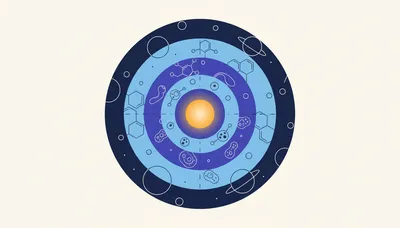
Physics, Chemistry, and Biology: One Story at Three Zoom Levels
A plain-language tour through the three foundational sciences — what they ask, how they answer, and why they're really one connected story about the same universe at different magnifications. No background required, no equations to memorize.
 intermediate
How to Fall in Love with Nature (Even If You Don't Think You're an Outdoors Person)
A practical, science-grounded course for people who suspect nature is 'not their thing' but wish it were. It builds a path from the modern disconnect to genuine love of the natural world — through what the research says, what the great nature thinkers learned, and concrete activities you can start this week.
 intermediate
Artificial Intelligence Explained: A Plain-Language Guide for Everyone
A non-technical, up-to-date tour of what artificial intelligence actually is, how it works under the hood, and what it means for your job, your home, and your future. No math, no jargon — just clear explanations you can use and repeat.
 intermediate
Your Nervous System: How Your Body Decides You're Safe
A plain-language journey through the human nervous system — from the single neuron firing in your fingertip to the ancient circuitry that decides, beneath your awareness, whether you are safe or in danger. The course connects classical neuroscience, the autonomic nervous system, the stress response, and polyvagal theory into one working map of why you feel what you feel.
 intermediate
The Developer's Side Hustle: How to Build a Profitable One-Person Online Business
A practical course for working developers who want to turn their ability to build software into a small, profitable online business — without a team, investors, or burnout. It covers why developers keep losing to non-technical founders, how to pick a business model, validate ideas, ship lean, price right, find customers, handle the legal basics, and stay sane doing it all on the side.
 intermediate
Improvisation: The Art of Making Something from Nothing
A cross-disciplinary journey through the science and craft of improvisation — spanning jazz, comedy, dance, and neuroscience. Discover what a bebop solo, a great improv scene, and a brilliant conversation have in common, and learn the mindset and structures that make spontaneous creativity possible.
 intermediate
Zettelkasten and Personal Knowledge Management: Build a Second Brain That Actually Works
A deep-dive course on why most note-taking fails and how the Zettelkasten method fixes it. From Niklas Luhmann's paper slip box to modern digital systems, learn how atomic linked notes turn collected information into genuine original thinking.
 intermediate
The Art of the Essay: How to Write Nonfiction That Thinks on the Page
A deep-dive audio course into the craft of the literary essay — from Montaigne's radical invention of the form to the voice, structure, and intellectual honesty that make contemporary essays unforgettable. Built for writers who want to stop announcing conclusions and start genuinely attempting something on the page.
 intermediate
Fungi Explained: The Hidden Kingdom That Shapes Our World
A guided tour through the strange, sprawling kingdom of fungi — what they are, how they live, and why they shape your dinner, modern medicine, the forest, and the planet's future. Built for curious listeners with no biology background, this course goes deep without ever needing a picture.
 intermediate
Ethics and Moral Philosophy Explained: A Beginner's Guide to How We Decide Right from Wrong
A guided tour through the big questions of ethics: what makes an action right, where morality comes from, and how the great thinkers have answered these questions across 2,500 years. From Aristotle's virtues to Kant's duties to the utilitarian calculus, this course builds the intellectual toolkit for thinking clearly about how to live.
 intermediate
How to Live Full-Time in an RV: A Beginner's Guide
A practical, end-to-end guide to trading a fixed address for life on the road. This course walks you through the real decisions full-time RVers face — choosing a rig, setting up the legal and financial scaffolding, finding places to sleep, and paying for it all — so you can tell the dream from the logistics.
 intermediate
How Stock Trading Actually Works: A Beginner's Guide to Markets, Charts, Options, and Risk
A plain-English audio course on how stock trading really works — from the hidden plumbing of the market to reading charts, evaluating companies, understanding options, and managing the risk and taxes that decide who lasts. Built for curious beginners who want a serious, honest foundation rather than hype.
 beginner
The Art of Fermented Drinks: Brewing Mead, Cider, and Small Beer at Home
Learn to brew honey wine (mead), wild-fermented cider, and historical low-alcohol small beer at home using simple equipment. You'll develop a genuine understanding of yeast biology, sugar fermentation chemistry, and practical troubleshooting skills — plus master the techniques to create drinks that are genuinely good.
 mixed
Wilderness Navigation: Maps, Compasses, and Finding Your Way Without GPS
A deep-dive into backcountry navigation using topographic maps, baseplate compasses, terrain association, and dead reckoning — the skills that keep you oriented when your phone battery dies and that deepen your understanding of the landscape. Covers contour line reading, magnetic declination, taking and following bearings, triangulation, trip planning, and navigating in fog or whiteout conditions.
 mixed
Double-Entry Bookkeeping: The Language of Business Finances
A first-principles guide to double-entry bookkeeping — covering the accounting equation, debits and credits, journals, ledgers, and financial statements. By the end, you'll be able to read a balance sheet, understand a P&L, and manage the books of a small business or side project with genuine confidence.
 beginner
Digital Photography: Light, Composition, and the Art of Seeing
A deep dive into the visual fundamentals of photography — understanding light, mastering composition, and developing the trained eye that separates good photographers from great ones. Built for beginners and hobbyists who want more than camera settings; this course teaches you how to truly see.
 mixed
Astrophotography on a Budget: Capturing Planets, Nebulae, and Deep Sky Objects
A skill-focused course on photographing the night sky with accessible equipment — from smartphones and entry-level DSLRs to dedicated star trackers. Covers polar alignment, exposure settings, image stacking, and post-processing to help you produce images that look impossible given your gear.
 beginner
Blacksmithing Fundamentals: Fire, Steel, and Shaping Metal by Hand
Learn to work hot metal at the forge — drawing out, bending, punching, and finishing simple tools, hooks, and hardware from raw bar stock. This course covers fire management, hammer technique, and the metallurgy of why steel behaves the way it does under heat and force, giving you both the practical skills and the deep understanding to grow as a blacksmith.
 mixed
Practical Canning & Food Preservation: Water Bath, Pressure Canning, and the Science of Safe Storage
A deep, practical guide to home food preservation — from the microbiology of why canning rules exist, to step-by-step water bath and pressure canning, to building a year-round pantry. Master every technique with a firm grounding in the science, so you can troubleshoot any recipe with confidence.
 mixed
Architectural Thinking: How Buildings Are Designed, Experienced, and Read
Learn to see buildings not just as structures but as arguments — about space, light, power, and human life. This course builds a foundation in architectural theory, history, and design principles so you can read the built environment with the eyes of an architect and the curiosity of an anthropologist.
 mixed
The Physiology of Exercise: What Happens Inside Your Body When You Train
A deep-dive into the science of exercise physiology — covering how muscles are built and powered, how the cardiovascular system transforms with training, what actually causes fatigue, and how energy systems fuel every rep and every mile. You'll finish with a genuine mechanistic understanding that makes you a smarter, more intentional athlete.
 mixed
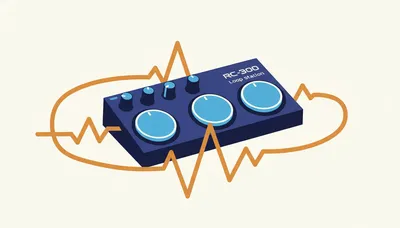
Boss RC-300 Loop Station: The Complete Player's Guide
A deep-dive course on the Boss RC-300 Loop Station — the flagship three-track floor looper trusted by solo performers worldwide. From first loop to full live performance, learn every feature, trick, and technique you need to make the RC-300 sing.
 intermediate
The Art of the Interview: How to Get People to Tell You the Truth
A deep, practical guide to the craft of interviewing — from oral history methodology and investigative journalism to documentary filmmaking and podcast conversations. This course teaches the psychology of trust, the architecture of great questions, and the counterintuitive discipline of listening more than you speak. Whether you're a journalist, researcher, filmmaker, podcaster, or just someone who wants to have better conversations, this course will transform how you approach getting people to open up.
 intermediate
The One-Person Online Side Hustle: A Complete Beginner's Playbook
A practical, story-driven course for non-technical people who want to build a real, sustainable online income stream entirely on their own — no coding, no employees, no startup capital required. Covers mindset, niche selection, idea validation, digital products, freelancing, newsletters, marketing, pricing, and the specific tools and first steps that actually work.
 mixed
Linguistics 101: How Language Works, Changes, and Shapes Thought
A deep, accessible introduction to linguistics — the science of language — covering phonetics, morphology, syntax, semantics, pragmatics, language change, acquisition, sociolinguistics, and the fascinating question of whether language shapes thought. For writers, philosophers, and curious minds.
 mixed
Narrative Nonfiction: Write True Stories That Read Like Novels
A deep craft course on long-form journalism and the personal essay — covering scene-setting, character development, structure, voice, and ethics — using landmark works by Joan Didion, John McPhee, Gay Talese, Ta-Nehisi Coates, and Tom Wolfe as models. Ideal for creative writing students and aspiring journalists ready to apply storytelling skills to real-world subjects.
 mixed
The History of Utopias: How Humanity Has Imagined the Perfect Society
From Plato's philosopher-kings to More's island paradise, from 19th-century commune experiments to Silicon Valley's techno-dreams, this course traces humanity's recurring vision of a perfect world — and what those visions reveal about our deepest values, fears, and contradictions.
Showing 48 of 101 courses