Architectural Thinking: How Buildings Are Designed, Experienced, and Read
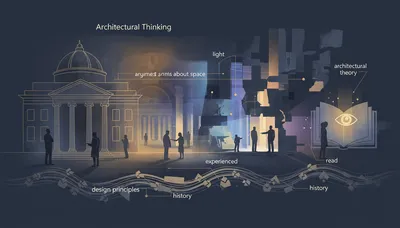
Learn to see buildings not just as structures but as arguments — about space, light, power, and human life. This course builds a foundation in architectural theory, history, and design principles so you can read the built environment with the eyes of an architect and the curiosity of an anthropologist.
15 sections
spacephenomenologyarchitecturedesignarchitectural theoryarchitectural historyurbanismmodernismbuilt environment
Share:
Funded byizzy
Progress0%
Sign up free to unlock:
- Track your progress across courses
- Request & vote on new courses
- Highlight text, take notes & bookmark
- Get personalized recommendations
- Build your public learning profile
Already have an account? Log in
Course Content
1Introduction2What Does Architecture Really Mean3How Buildings Use Space as Language4How Architects Use Light as a Building Material5Form vs Function in Architecture: What Really Matters6How Buildings Evolved: Architectural History From Ancient Temples to Modern Towers7How Buildings Reflect Power, Identity, and Social Control8How Buildings Make You Feel: Phenomenology in Architecture9How Ornament, Symbol, and Decoration Function in Building Design10How Vernacular Architecture Develops Without Professional Architects11How Architecture Shapes Urban Spaces and City Design12How Architects Design Buildings: The Design Process13Contemporary Architecture: What Defines Modern Building Design Today14How to Develop an Architectural Eye and Read Buildings15How to Analyze Buildings: A Practical Field Guide
Sources & References
This course draws from the following sources. Visit them for additional depth.
- 🔗
- 🔗
- 🔗
- 🔗
- 🔗
- 🔗
- 🔗
- 🔗
- 🔗
- 🔗
- 🔗
- 🔗
- 🔗
- 🔗
- 🔗
- 🔗
- 🔗youtube.com — Watch ↗webpage
- 🔗
Want a course that doesn't exist yet? Request one →