How to Make Fermented Apple Cider at Home
Cider: Fermented Apple Magic
Cider might be the most underrated fermented drink. It sits comfortably between beer and wine in alcohol content (usually 5-8% ABV), requires no boiling, no grain processing, no complicated equipment — just apple juice and time. At its best — made from heritage apple varieties, fermented slowly at cool temperatures with genuine attention to detail — cider is genuinely extraordinary. At its worst, it's the sticky-sweet fizzy stuff you probably had at a school dance and spent years trying to forget.
The difference between those two worlds is what this section is really about.
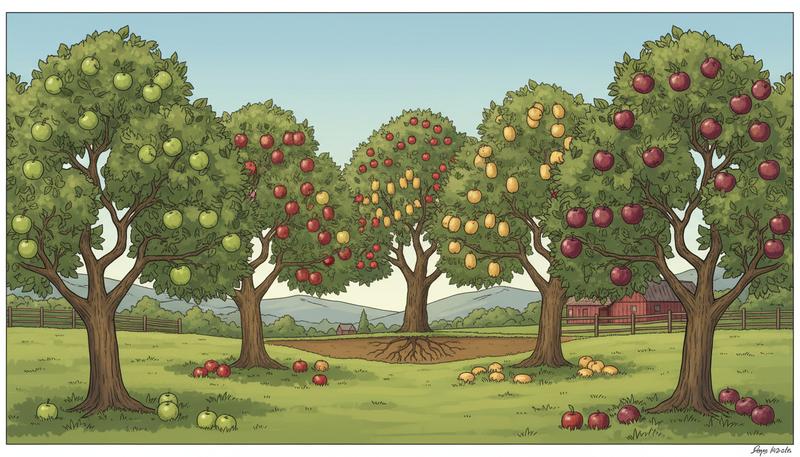
The History of Cider
Apples — or at least their wild ancestors — have been hanging around Europe for tens of thousands of years. But the cultivated apple (Malus domestica) was developed in central Asia and gradually spread westward through human migration and trade. By the time the Roman Empire was at its peak, there were already dozens of named apple varieties, and cider-making was a serious business in what's now England and France.
The Romans left written records of cider-like drinks in northern Europe, places where the climate stubbornly refused to cooperate with wine grapes. The English word "cider" comes from Old French sidre, which traces back through Latin sicera, which itself comes from Hebrew shēkhār — just meaning an intoxicating drink. When the Normans invaded England in 1066, they brought more than conquest; they brought a sophisticated cider tradition from Normandy — established apple orchards, specific cider apple varieties that had been carefully bred for tannin and flavor rather than eating fresh, and the knowledge of how to age and ferment properly.
Fast forward to the seventeenth century: cider had become the dominant drink in western England and much of France. Apple orchards appeared on virtually every farm. Workers were even paid partly in cider — "cider wages" was standard practice. Samuel Pepys recorded in his diary drinking excellent cider with obvious appreciation. Charles I had a famously strong preference for Herefordshire cider.
The American cider story is different. Colonial settlers arrived expecting to grow European wine grapes and discovered the climate had other ideas. But apple trees? Apple trees thrived brilliantly. Cider became the most common drink in colonial America — everyone drank it constantly. John Adams, the second U.S. President, reportedly started every morning with a tankard of hard cider, which he genuinely believed was healthy and moderate. This wasn't some eccentric habit; most colonists consumed more cider daily than we might drink coffee today. It was reliable, relatively safe (the fermentation and acidity killed off many pathogens), and required nothing beyond apples and time.
Cider's spectacular twentieth-century collapse happened for a few converging reasons: Prohibition wiped out the entire orchard infrastructure in the US; cheap commercial beer became widely available; the apple industry shifted toward "dual-purpose" dessert varieties bred for eating and cooking, not fermenting. The specialized cider apple orchards — which took decades to establish and only made economic sense if cider was your primary crop — were simply abandoned or replanted with industrial varieties that would never make serious cider.
The craft cider revival of the last two decades happened because people started rediscovering heritage cider apple varieties — Yarlington Mill, Dabinett, Kingston Black, Foxwhelp, Stoke Red — and reconnecting with the traditional farmhouse styles of Normandy, Brittany, Herefordshire, and Somerset. Something interesting emerged: many of these heritage varieties were nearly extinct, surviving only in small orchards run by dedicated (sometimes stubborn) orchardists. But as demand for serious cider grew, they made a genuine comeback.
Apple Varieties and Why They Matter
Here's where cider gets genuinely complex — much more so than mead. For mead, honey choice matters enormously, but honey's sugar content is fairly stable. Apple juice? It's all over the place. Sugar content varies tremendously. Acidity varies. Tannin varies. These three things — sugar, acid, tannin — are the fundamental variables that determine what your cider will actually taste like. Understanding how they work is the real foundation of intelligent cider-making.
Sugar Content
Most fresh apple juice lands in the 1.040-1.060 specific gravity range, which (using the rough conversion we discussed earlier) means your finished cider will be somewhere in that 5-8% ABV zone. High-sugar varieties grown in warm, sunny years can hit 1.080 or higher. Cool, wet growing seasons? You get lower-sugar juice. There's no way around it.
Why care about this? Because sugar content directly controls your cider's body, final alcohol level, and how the fermentation actually behaves. High-gravity juice (1.070+) ferments slowly and produces something richer and fuller in the mouth — think of it like the difference between a light wheat beer and a heavier ale. Low-gravity juice (1.040) ferments quickly and produces something thinner and crisper. Neither is inherently better; it all depends on what you're trying to make.
Acidity
Apples contain malic acid — the same stuff that makes sour candies feel like they're stripping the enamel off your teeth. Higher-acid apples (many cooking varieties like Bramleys, wild apples, and some traditional cider varieties) produce ciders that taste crisp and bright. Very low-acid ciders? They taste flat and uninteresting. There's no snap to them. No reason to reach for another sip. The sweet spot for balanced cider is generally a pH of 3.2-3.7 — slightly more acidic than typical finished wine, but not so acidic you're puckering like you've sucked a lemon.
Here's something that catches a lot of cider beginners off guard: they assume that starting with sweet apples (low acid) is "easier" because it seems more approachable. Wrong. The opposite is actually true. Low-acid ciders are harder to make taste genuinely good, because they lack the structural skeleton that acidity provides. High-acid ciders might taste harsh right out of fermentation — rough, even — but they age beautifully and develop real complexity over time. This is the same principle you see in wine: a wine with good acidity tastes awkward at six months but magnificent at five years, while a low-acid wine tastes fine young but flat and tired when aged.
Tannins: The Secret to Serious Cider
This is where cider apple varieties really earn their reputation and where most home ciders stumble: tannins — those astringent, grippy compounds you find in red wine and strong tea — are genuinely essential for structure in good cider. Eating apples have almost no tannin (it's too astringent for snacking). Traditional cider apple varieties were specifically bred to have high tannin alongside adequate sugar and acid. Tannins give cider that dry, complex, slightly bitter finish — the thing that separates serious farmhouse cider from fancy apple juice.
Think of tannins as the architecture of a cider. A well-tannic cider has texture. It has grip. It finishes with something lingering and slightly bitter that keeps the drink from collapsing into one dimension. When you taste a really good traditional cider from Somerset or Normandy — especially one that's been aging for a year or two — you're experiencing that dry, complex finish directly from tannin-rich apples. Remove the tannin, and even a perfectly fermented cider tastes like something between apple juice and wine rather than a genuine drink with its own identity.
This is exactly why making exceptional cider from store-bought juice is genuinely difficult: commercial apple juice blends are specifically made from dessert varieties selected to be low in tannin (because tannin is astringent and makes apples unpleasant to eat raw). You can ferment that juice beautifully and produce something clean and pleasant, but you'll struggle to reach the complexity of traditional styles. It's a limitation of the raw materials, not your technique.
graph LR
    A["Apple Variety Profile"] --> B["Sugar Content"]
    A --> C["Acidity"]
    A --> D["Tannin Content"]

    B --> E["ABV & Body"]
    C --> F["Brightness & Structure"]
    D --> G["Complexity & Aging Potential"]

    E --> H["Finished Cider Character"]
    F --> H
    G --> H
Apple Categories
To make this practical, here's a useful way to think about apples:
| Category | Examples | Tannin | Acid | Use in Blending |
|---|---|---|---|---|
| Sharp | Bramley, Granny Smith | Low | High | Adds acidity, refreshing quality |
| Bittersweet | Yarlington Mill, Dabinett, Chisel Jersey | High | Low | Adds tannin, body, and weight |
| Bittersharp | Kingston Black, Stoke Red, Foxwhelp | High | High | Complexity and balance — the ideal |
| Sweet (dessert) | Gala, Fuji, Golden Delicious | Low | Low | Easy to obtain, produces mild cider |
The traditional approach — still used in Somerset and Normandy — is to blend apple varieties to hit balance. A cidermaker might use 70% bittersweet apples (for structure and tannin), 20% bittersharp apples (for complexity), and 10% sharp apples (for brightness). This isn't some rigid formula handed down from on high; different orchards and cidermakers adjust based on their taste preferences and whatever apples are actually available.
Here's a concrete example: You're making your first small-batch cider. You get juice from three places: a local orchard provides cider apples (mostly bittersweet variety), your neighbor's heritage tree produces a tart sharp variety, and you fill out the volume with store-bought fresh-pressed juice (a dessert blend). When you blend these roughly equally, you've created something more balanced than any single source could offer on its own. The bittersweet keeps things from feeling thin. The sharp variety adds brightness and gives the cider aging potential. The dessert juice makes it immediately approachable. If you ferment this well, you get more depth than sticking with just one juice source.
For beginners using store-bought juice, your control over these variables is limited. Commercial apple juice (the carton from the supermarket) typically comes from dessert apple blends — low tannin, which means clean but relatively simple cider. But honestly, this is a great starting point and shouldn't discourage you. As you develop your palate and understand what actually appeals to you, you can hunt down local orchards for fresh-pressed heritage juice, or deliberately blend different juice types to engineer the profile you want.
Understanding Cider Fermentation: What Makes Cider Different from Mead
When you ferment apple juice, you're not starting with a blank slate. Fresh apple juice — especially juice that's just been pressed or came from a farmers' market — already contains wild yeast and bacteria living on the apple skin. This is fundamentally different from honey must, which is basically sterile and requires you to either pitch cultured yeast or take your chances with whatever wild microbes blow in.
Wild fermentation in cider: Take freshly pressed apple juice, leave it at room temperature with no added yeast and minimal sanitation, and it will ferment. Within days you'll see activity as wild microbes multiply and begin converting sugar to alcohol. Some of these microbes are genuinely good (cider yeast, lactic acid bacteria); others are potentially problematic (spoilage organisms, vinegar bacteria). This is how traditional farmhouse cider works — and it works because the acidity and alcohol create a naturally hostile environment for most unwanted microbes. But wild fermentation is also unpredictable. You might end up with something extraordinary, or you might end up with vinegar.
Cultured fermentation in cider: Most serious home cider makers pitch a cultured wine yeast or cider yeast (typically Saccharomyces cerevisiae strains selected specifically for cider, sometimes Saccharomyces bayanus). This gives you actual control. You know which microbe is driving fermentation, you can predict the timeline and flavor profile, and you dramatically reduce spoilage risk.
The choice between wild and cultured fermentation is honestly more philosophical than practical. Wild fermentation connects you to traditional methods and can produce remarkable results if you're in a good climate and practice solid sanitation. Cultured fermentation is more reliable and more forgiving — especially if you're just starting out.
Keeving: The French Technique for Natural Sweetness
There's a technique used in traditional Norman and Breton ciders called keeving that's worth knowing about because it's fascinating and increasingly relevant to home cider makers. The process involves carefully managing fermentation temperature and juice composition to encourage the formation of a thick, protein-pectin gel layer on top of the fermenting juice — French cidermakers call it "chapeau brun" (brown cap). This gel draws yeast nutrients upward out of the liquid and physically restricts yeast access to the sugar, which naturally halts fermentation before all the sugar gets consumed.
The result is slowly fermented cider that stops at 3-5% ABV and retains considerable residual sugar — a naturally sweet, gently sparkling cider without added sugar or chemical stabilization. Think about what that means: you're not stopping fermentation with sulfites or force-carbonating with CO₂; you're deliberately engineering the fermentation conditions to naturally limit both alcohol production and yeast activity.
Keeving demands specific conditions: you need apples high in both pectin and tannin (not typical dessert varieties), cold fermentation (50-60°F / 10-16°C), careful juice management before fermentation starts, and patience. The technique largely disappeared in the twentieth century because it's labor-intensive and requires specific resources — cold cellars, heritage apples, time. But it's genuinely experiencing a revival among craft cider makers and is absolutely worth understanding, even if you don't attempt it right away.
Why bring it up here? Understanding keeving shifts how you think about fermentation control. In mead and beer, you use yeast selection and temperature to influence flavor. In cider, you have all those tools plus this unique ability to engineer natural sweetness through composition and temperature. It's a reminder that fermentation isn't something that happens to your ingredients; it's something you orchestrate.
Practical Starting Point: Juice Selection for Your First Cider
Given all this complexity about apple varieties, where should you actually begin? Here's the honest truth: start with what you can actually access. If you have a local orchard selling fresh-pressed juice, buy it — especially if they can tell you something about the apples in the blend. If you can only get store-bought juice, that works fine too; use it. The fermentation process and the underlying principles are identical. Your first cider made from supermarket juice and cultured yeast will teach you more practical cider-making than reading about keeving or heritage varieties ever could.
What matters more initially is consistency and paying attention. Make notes on your juice's specific gravity, the temperature where you ferment, when fermentation actually finishes, and most importantly, what the cider tastes like at the end. Over time, these notes become the real foundation of understanding. You'll start noticing patterns: "When I ferment at 55°F instead of 65°F, the cider develops a more floral character." Or: "Adding 20% of that tart apple juice makes a noticeable difference in how the cider finishes." This is how you transition from following a recipe to developing actual skill as a cider maker.
Only visible to you
Sign in to take notes.