How to Build Healthy Habits That Actually Stick
The identity framework we just explored answers a fundamental question: why is health behavior change so stubbornly difficult? Our self-concept is the deepest layer of motivation, and when a health behavior feels at odds with who we think we are, no amount of factual information can override that resistance. But understanding identity is only half the puzzle. The other half requires us to look at how health behaviors actually get triggered and executed in the brain — and confront an uncomfortable truth: the standard public health playbook, built almost entirely around information delivery, fails with remarkable consistency.
No domain reveals the chasm between knowing and doing more clearly than health. We have decades of epidemiological certainty: regular exercise cuts cardiovascular disease risk substantially. Sleep deprivation impairs cognition and physiology in measurable ways. Diet patterns influence metabolic health more profoundly than most pharmaceutical interventions. We've known all this for years. And yet that knowledge changes almost nothing about what people actually do.
This isn't a puzzle of human weakness or character. It's a systems problem — rooted in the actual machinery of how your brain makes decisions about health moment to moment. The science of habit offers the clearest explanation for why information campaigns keep failing, and more importantly, it points toward solutions that actually stick. This section is where everything we've covered in the course converges on the domain with the highest stakes. We're going to trace how automatic systems govern health behavior, expose why public health's favorite tool keeps misfiring, and walk through what habit-based interventions actually look like in clinical and personal contexts — complete with real effect sizes.
The core issue comes down to cognitive efficiency. System 2 is expensive. The brain will always try to hand routine tasks over to System 1 — the fast, automatic processor. The question for health behaviors is whether that handoff produces good automatic patterns or bad ones.
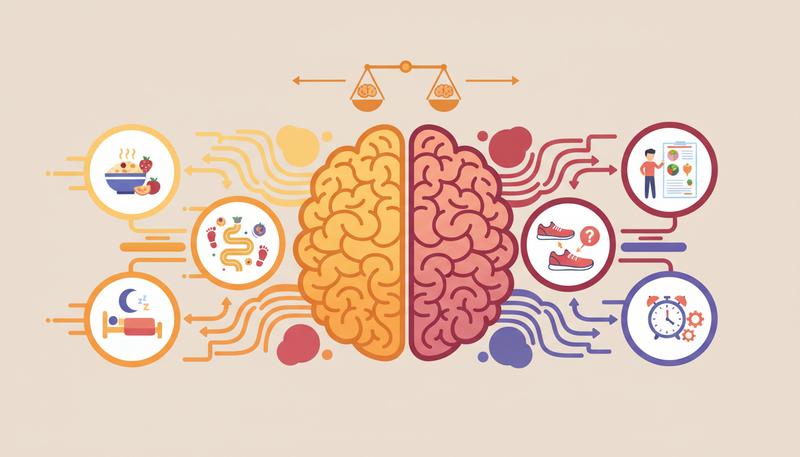
Why Information Campaigns Keep Failing (And Will Keep Failing)
In 1964, the US Surgeon General released a report on smoking and health. It was comprehensive, unambiguous, and it made front-page news across the country. Millions of Americans read it, understood it, nodded in agreement with its conclusions. Then millions of them went home and smoked anyway.
This is the foundational problem in public health, and we haven't solved it yet. For over a century, the dominant assumption has been that people make bad health choices because they lack good information — and if you just give them the information, behavior will follow. It's an intuitive theory. It's also almost entirely wrong.
The track record is sobering. Anti-obesity campaigns have run nonstop in wealthy countries where nutritional information is ubiquitous. Obesity rates have kept climbing. Smoking campaigns successfully communicated the health risks to smokers who — surveys confirmed — already knew them. Physical activity guidelines have been publicized extensively; only about 23% of American adults meet them. The intention-behavior gap isn't an occasional problem. It's the dominant pattern.
Here's the mechanistic reason: information campaigns are targeting the wrong processing system. They're designed to update System 2 — to give people rational reasons to change. And System 2 might accept those reasons completely. But System 2 doesn't run the morning routine. System 1 does. The person who genuinely absorbed the health campaign message goes home to the same kitchen, the same pantry, the same dinner context — and executes the same automatic sequence they always have. The intention never reached the habit.
Remember: Information changes minds. Context changes behavior. These are not the same thing.
This isn't a cynical commentary on human weakness. It's a precise account of a real limitation in how the brain works. System 2 can update beliefs; it doesn't automatically reprogram System 1 responses. Those require something else entirely: repeated behavior in consistent contexts, until the context itself becomes the trigger.
The scale of this failure matters. Public health allocates enormous resources to campaigns built on faulty theory. A behavior change science that actually accounts for automaticity looks radically different.
The Case for Habit-Based Interventions: What the Evidence Actually Shows
If information campaigns fail because they target System 2 while behavior lives in System 1, the obvious alternative is interventions that directly build automaticity — that help people form context-cue associations instead of merely strengthening motivation. And the evidence that this approach outperforms motivation-based strategies is now quite substantial.
A landmark study gave participants a simple protocol: pick a health behavior you want to adopt, choose a single once-daily environmental cue to pair it with, and track both behavior and automaticity over time. The cues were deliberately concrete — "after breakfast, I will eat a piece of fruit" or "when I put on my shoes, I will take a walk." The results, published in the European Journal of Social Psychology, showed automaticity building in a classic asymptotic curve: rapid early gains, then a plateau around 66 days on average. Crucially, missing a single day didn't derail the process — automaticity resumed afterward. This single finding has enormous practical weight in clinical settings. The all-or-nothing thinking that causes patients to abandon efforts after a single lapse isn't just psychologically damaging — it's mechanistically false.
A randomized controlled trial tested habit-based weight loss against a control group. The intervention was minimal by clinical standards — a brief leaflet listing 10 simple diet and activity behaviors, framed as habits to build through repeated context-dependent performance. No coaching, no accountability app, no meetings. After eight weeks, the habit group had lost an average of 2 kg versus 0.4 kg in controls. By 32 weeks, those who stuck with it had lost about 3.8 kg. But what's more revealing than the weight numbers is what participants said: their new behaviors had become "second nature," and they felt "quite strange" if they skipped them. That's not motivation. That's genuine automaticity.
graph TD
    A[Motivation-Based Approach] --> B[Patient receives information]
    B --> C[Patient forms intention]
    C --> D[Motivation drives early behavior]
    D --> E[Motivation wanes over weeks]
    E --> F[Behavior collapses]

    G[Habit-Based Approach] --> H[Patient identifies cue-behavior pairing]
    H --> I[Repeated context-cue association]
    I --> J[Automaticity gradually builds]
    J --> K[Behavior persists without motivation]
The clinical implication is significant. Research on brief habit-based advice in real health settings suggests that shifting from "what to change and why" (a System 2 appeal) to "how to make this automatic" (a System 1 strategy) produces both easier delivery and more durable results. The instruction is elegantly simple: repeat a chosen behavior in the same context until it requires no effort. That's the entire prescription.
Context-Cue Associations in Practice: Exercise, Nutrition, and Sleep
Principles matter, but they come alive in specific contexts. Let's walk through how habit formation works differently across the three health behaviors most people actually care about — and where the research is deepest.
Exercise: The Anchor Point Problem
Exercise is where habit science shows its clearest signal, partly because it's what most people explicitly try and fail at repeatedly. Research consistently shows that people who exercise habitually have stronger context-cue associations than people who exercise through willpower alone. They go at the same time, often in the same clothes, frequently triggered by the same preceding event — waking up, finishing work, eating lunch. The whole sequence unfolds with minimal deliberation.
Most exercise attempts fail for an architectural reason: people choose to exercise without choosing when and where. They say "I'm going to work out more" — which sounds like commitment until the moment they have to execute. Then that decision has to be remade fresh every single day, competing against fatigue, motivation fluctuations, and everything else demanding attention. The key clinical move isn't deepening motivation; it's helping people install a specific cue.
Event-based cues work better than time-based ones. "After I pour my morning coffee" is more robust than "at 7am" because it's tied to a behavioral anchor rather than a clock, and clocks slip when you travel or sleep in. The specificity research is striking: gym-goers who worked out at consistent times showed markedly higher automaticity and more stable attendance than those who worked out at variable times, even when total weekly frequency was matched. Consistency of context appears to matter more than frequency alone — the cue, not the calendar, is doing the heavy lifting.
Tip: Behavioral anchors — things you already do reliably — work better as exercise cues than time-based triggers, which can shift with schedule changes.
Nutrition: The Environment Problem
Nutrition is where environmental design does the heaviest lifting, and where relying on willpower is most obviously futile. Across multiple meta-analyses in choice architecture — including the influential body of work summarized by researchers like Kelly Brownell on food environment modification — a consistent pattern emerges: people systematically underestimate how much their eating is driven by environmental cues, and overestimate how much conscious choice drives it. Plate size, food visibility, proximity, package size, and social context all shape consumption in ways that bypass deliberate decision-making entirely.
The practical implication is that changing what you eat through reasoning about food is much harder than changing what you eat by redesigning the environment that prompts eating. Want to eat more fruit? Don't rely on remembering to reach for it — put it in a bowl on the counter where it's visually prominent. Want to eat less of something? Move it out of sight. These aren't tricks or willpower hacks. They're habit mechanics. The fruit bowl becomes a cue that triggers reaching without deliberation. Hidden snacks lose their automatic pull because you never encounter the cue.
This is why cafeteria redesigns — moving healthier options to eye level, placing vegetables at the start of the line before the entrees, making fruit the easy grab-and-go item — consistently outperform nutrition education programs in changing what people actually eat. The information in both interventions is identical. What differs is whether the behavior change target is System 2 (education) or System 1 (environmental cue structure).
Context-cue associations in eating also attach strongly to situations and social triggers. Many people eat poorly not from lack of knowledge but because their poorest eating is fully automated — the vending machine at 3pm, popcorn at movies, a second serving because the pot is still on the stove. Interrupting these patterns means identifying and modifying the cue, not battling the behavior through sheer resolve.
Sleep: The Circadian Complications
Sleep hygiene advice is, at its core, a set of habit prescriptions — consistent wake times, pre-sleep routines, controlled environments. But sleep is uniquely difficult compared to exercise or nutrition for a reason that often gets overlooked in habit discussions: the behavior change target isn't just psychological. It's physiological.
The circadian system — the approximately 24-hour biological clock regulating alertness, temperature, and melatonin release — operates as a powerful System 1 process that runs entirely below conscious awareness. This is good news when your habits align with your chronotype; it's the source of significant friction when they don't. Someone who has spent months staying up until 2am and sleeping until 10am has trained their circadian system accordingly. The melatonin release shifts later. Core body temperature follows. Trying to shift bedtime earlier by an hour through conscious intention is fighting both the behavioral habit and its underlying physiology — two simultaneous System 1 forces pushing against one System 2 decision.
This is why sleep environment design matters so much: not just removing the phone, but understanding that light exposure is the primary circadian zeitgeber (time-setter). Evening light — especially the blue-spectrum wavelengths common in screens — suppresses melatonin and signals the circadian system to delay the sleep window. Eliminating that light exposure in the hours before bed isn't a lifestyle preference; it's directly intervening in a biological feedback loop. The bedroom that is dark, cool, and quiet isn't just comfortable — it's a set of context cues the circadian system learns to associate with the physiological transition into sleep.
What makes sleep habit formation genuinely hard is the lag time in circadian recalibration. Unlike exercise, where skipping a session has no direct physiological effect on your body's readiness to exercise the next day, inconsistent sleep timing actively disrupts the biological signal that makes sleep easier. Every time someone sleeps late on weekends, they introduce "social jetlag" — a partial circadian misalignment that makes Monday-morning functioning harder and erodes the context-cue associations they've been building during the week. Consistent wake times, even on weekends, aren't about rigidity for its own sake. They anchor the circadian signal that everything else depends on.
Automaticity and Long-Term Health Behavior: Why Willpower-Based Strategies Collapse
Here's what the data on behavior change over time consistently tells us: most health interventions show their strongest effects in the first few weeks, then experience steady decline in adherence. People don't forget that exercise matters. Their motivation doesn't suddenly evaporate. The erosion is more structural: life gets complicated, the novelty wears off, competing demands pile up, and the behavior that hasn't yet been automated gradually disappears from the schedule.
The problem is that motivation isn't stable. It fluctuates with sleep quality, stress, mood, blood sugar, social context, and factors you can't control. A strategy that depends on high motivation at the moment of action will fail every time motivation dips — which for everyone is frequent.
Automaticity removes motivation from the equation. Once a behavior is sufficiently habitual, it occurs because you encountered the cue — not because you felt like doing it. Research on exercise specifically has found that people with high automaticity exercise at consistent rates regardless of motivational ups and downs, while low-automaticity exercisers show exercise patterns that track closely with how they're feeling. In plain terms: automated exercisers work out when they don't want to. Motivated exercisers skip when they're tired.
This distinction is enormous. It's arguably the whole game. The population-level failure of health behavior change is not primarily a motivational problem — surveys show most people want to be healthier and many have genuinely tried. The failure is structural: their health behaviors never successfully handed off from System 2 to System 1, leaving them vulnerable to every fluctuation in conscious will.
Warning: If your health strategy requires you to feel motivated, it will fail every time you don't. Build the environment, not the willpower.
Implementation Intentions in Clinical Settings: Effect Sizes That Matter
Implementation intentions — the if-then planning we covered earlier — deserve focused attention here because the health behavior evidence base is among the most developed of any domain, and the clinical translation is particularly direct.
Meta-analyses show that implementation intentions roughly double the likelihood people follow through on health intentions compared to forming the intention alone. In clinical settings, they've demonstrated effectiveness for medication adherence, cancer screening attendance, physical activity, and dietary change. The effect is consistent enough that public health researchers have begun advocating for implementation intention components as a standard element of any health promotion intervention.
What makes the clinical application especially instructive is how clearly it exposes the distinction between knowing what to do and specifying when and where to do it. A study on cervical cancer screening found that women who formed implementation intentions specifying when and where they'd schedule an appointment were significantly more likely to attend screening than women who simply expressed strong intentions to get screened. The information about why screening matters was held constant. Only the "when and where" instruction changed outcomes.
The implication for practitioners is significant. A clinician who says "on your walk home from the bus stop, turn left instead of right and walk an extra block — do this every day for a month" has done something more durable than spending twenty minutes explaining why walking benefits health. The first instruction creates a cue-behavior link that the brain can eventually execute automatically. The second creates an intention with no specified trigger — which means every execution requires the patient to actively retrieve the goal from memory and choose, in competition with everything else happening in their life.
The mechanism is what habit science predicts: by specifying the situational cue in advance, implementation intentions effectively delegate the initiation of the response to the environment. With repetition, this link can strengthen from a mental if-then plan into genuine automaticity — the behavior starts happening before the person has consciously decided to do it.
The Health Habit Formation Timeline: Realistic Expectations
For specific health behaviors, realistic timeline expectations — grounded in the Lally et al. research on automaticity curves — matter enormously in clinical and personal contexts, because they determine whether someone interprets the difficult middle period as failure or as progress.
Simple behaviors (drinking water with breakfast, taking a daily vitamin, doing 10 push-ups) typically automate relatively quickly — often in four to eight weeks with consistent execution.
Moderate behaviors (a 20-minute walk at a set time, weekly meal prep, consistent bedtime) usually take longer — eight to 16 weeks before the behavior feels effortless rather than deliberate.
Complex behaviors (full workout programs, comprehensive dietary overhauls, elaborate sleep protocols) may take six months or more to fully automate, and may never fully automate if they contain too many variable components that prevent a reliable cue-response sequence from consolidating.
This matters enormously for clinical expectations. Most health efforts get abandoned around weeks two to four — right in the trough where novelty has worn off, motivation has settled back to normal, and the behavior still hasn't automated. People interpret this friction as evidence the change "isn't working" or that they "just aren't the exercise type." Neither interpretation is accurate. They're simply in the difficult middle phase where the behavior is no longer novel but hasn't yet become automatic.
graph LR
    A[Week 1-2: High motivation, novelty effect] --> B[Week 3-6: Motivation plateau, still effortful]
    B --> C[Week 6-12: Automaticity building, behavior increasingly easy]
    C --> D[Week 12+: Behavior largely automatic, motivation less relevant]
    B --> E[⚠️ Most people quit here]
Missed performances in real health settings are inevitable — travel, illness, disrupted routine. The research finding that occasional lapses don't significantly impair habit formation should be communicated proactively, because the binary thinking that emerges after a missed day ("I've failed, I'm starting over") is not only emotionally destructive but mechanistically false. The automaticity that has accumulated doesn't evaporate with a single disruption.
When Motivation Is Necessary — and When It Becomes Counterproductive
This is the nuance that's easy to miss when the automaticity evidence is so compelling: motivation isn't bad. It plays an essential and irreplaceable role in health behavior change — just a much narrower role than popular thinking assigns to it.
Motivation is necessary for initiation. The decision to start a new health behavior requires System 2 work: evaluating options, setting goals, designing a habit structure. You can't automate a behavior you haven't deliberately chosen. The motivation that gets you to the gym on day one is genuinely valuable.
Motivation is necessary for troubleshooting. When an established routine breaks down — due to travel, illness, major life change — you need deliberate re-engagement to rebuild. This is System 2 work that motivation properly serves.
Motivation becomes counterproductive when it's treated as the primary sustaining mechanism. This is where most health strategies falter. They treat motivation as fuel that should run indefinitely, rather than as ignition that starts the engine. When motivation is ignition, the goal of the early weeks is building enough context-cue association that the behavior can continue without it. When motivation is expected to be ongoing fuel, every dip in how you feel becomes a threat to the behavior.
Research on motivational interviewing — a clinical approach helping people clarify their own reasons for change — is instructive here. MI is one of the better-supported behavior change approaches for initial engagement. It genuinely works. But the research also shows MI effects decay over time without structural habit-building support. Motivation gets you in the door; automaticity keeps you coming back.
There's also an interesting dynamic during the formation process itself. As automaticity increases, the experience of the behavior changes: it shifts from feeling like an act of will to feeling like an absence of friction. People report the behavior "just happens" and that the question of whether to do it stops arising. At this point, remaining highly deliberative about the behavior can actually slow the handoff — someone constantly making a conscious choice to exercise may inadvertently keep it in System 2 rather than allowing it to settle into System 1. The most durable health habits are often described by their owners not as achievements, but as things they simply do — the way they describe brushing their teeth.
Health is the domain where the knowing-doing gap carries the highest stakes — and where closing that gap through habit science rather than motivational bootstrapping shows the most potential. Not because motivation is unimportant, but because the brain's automatic systems are powerful enough to sustain healthy behavior indefinitely once properly configured. And motivation, for all its significance, simply isn't built for long-term sustainability. The context is.
Only visible to you
Sign in to take notes.