How to Balance a Side Hustle With Your Day Job
Time, Money, and the Day Job: Managing Your Side Hustle Without Burning Out
Now that you've got your tool stack sorted, there's a harder problem to solve: you're probably doing this while holding down a full-time job, managing a household, and trying to have something resembling a social life. You're not quitting your job tomorrow and going all-in. You're trying to build something real in the margins of a life that's already pretty full.
This is actually where most side hustle advice falls apart. Courses spend weeks on tools, templates, and strategies — but almost none of them address the real constraint you're facing: time. Not in the abstract, but the concrete hours you actually have available after sleep, work, and basic life maintenance. The technology will serve you fine. What will make or break your side hustle is whether you can sustain consistent effort without destroying your health, your job, or your relationships in the process.
That's not a limitation. That's just the actual starting point for most people. Roughly 27% of American adults currently have a side hustle, and the overwhelming majority of them are building while employed. The ones who succeed aren't necessarily the ones with the most time — they're the ones who've figured out how to use the time they have without burning out. This section is about exactly that: the practical infrastructure of a sustainable side hustle.
Here's the thing nobody says directly: 10–15 hours a week is plenty to start, and more hours aren't necessarily better if those hours are low-quality. What matters is how you protect and structure the time you have.
Time-Blocking for Side Hustlers
Time-blocking sounds obvious until you actually try to implement it alongside a real job, and then you discover something harsh: your schedule has approximately 15 different entities with competing claims on your attention. Your boss. Your inbox. Your family. Your commute. That thing called sleep.
The solution isn't to find more time. It's to declare specific time non-negotiable in advance — before the week starts, before the competing demands arrive.
Here's a practical system that actually works:
Find your two "anchor blocks" per week. These are the two longest sessions you can realistically protect — ideally 90–120 minutes each. For most people, this means early morning before the household wakes up, late evening after kids are asleep, or weekend mornings. These blocks are sacred: this is where you write, create, build, and think.
Add three "maintenance blocks" of 30–45 minutes. These are for lower-intensity tasks — answering emails, scheduling posts, doing research, updating your tracking spreadsheet. Lunch breaks work. Commutes work if you're not driving. That 30-minute pocket right before the household comes alive works.
Put them on your actual calendar. Not a to-do list. Not a vague intention. A calendar event with a title, a duration, and — if possible — a location ("kitchen table, headphones on" counts). The research on habit formation is pretty clear on this: specific when/where/how plans crush open-ended goals every time.
Tip: Treat your anchor blocks the same way you'd treat a meeting with an important client. If something tries to occupy that slot, you have a genuine conflict. You can reschedule, but you can't just cancel.
One thing that surprises people: shorter, consistent sessions beat longer, sporadic marathons. I knew someone who built a six-figure Etsy business almost entirely in 45-minute sessions at 5:30 AM, five days a week. Not because that was her ideal schedule — it wasn't. It was just the only time she could reliably protect. Three years in, the business was thriving, and her dream of a more flexible schedule was still waiting.
Energy Management vs. Time Management
Here's what time-blocking alone doesn't solve: not all hours are created equal. An hour at 9 PM after a brutal day of meetings is not the same as an hour at 6 AM when you're fresh. You might technically have the time in both cases, but your cognitive capacity is radically different.
This is why energy management is at least as important as time management for side hustlers. The core principle: match your task type to your energy state.
graph TD
    A[Your Energy Level] --> B{High Energy}
    A --> C{Medium Energy}
    A --> D{Low Energy}
    B --> E[Deep creative work: writing, building, strategizing]
    C --> F[Moderate tasks: editing, client emails, research]
    D --> G[Admin: scheduling, tracking, social media posting]
The practical implication is straightforward. If you're a morning person whose brain fires on all cylinders from 6–8 AM, that's when you write your newsletter, record your course module, or do the creative work your product requires. That time is too valuable to spend organizing your Notion dashboard or fussing with formatting.
If you're a night owl who hits flow state at 10 PM, build your schedule around that — but be brutally honest about whether 10 PM sessions are sustainable long-term or whether you're consistently stealing from your sleep to pay the hustle.
Sleep is not negotiable. I know it sounds basic, but the most common failure mode for early side hustlers is treating sleep as the elastic variable — the thing that compresses when everything takes longer than expected. The research on sleep deprivation is unambiguous: cognitive performance degrades significantly after several days of less than seven hours. The person experiencing the degradation is usually the last to notice it. You'll write slower, make worse decisions, and produce lower-quality work on six hours of sleep than on eight. The math doesn't work the way it feels at midnight.
The Most Common Time-Wasters Disguised as Productivity
Experienced side hustlers call this productive procrastination: activities that feel like work, look like work, and even live on your to-do list as work — but don't actually move the needle.
The usual suspects:
Logo and brand design rabbit holes. Hours spent on Canva tweaking your logo, choosing fonts, debating color palettes. In year one, nobody cares about your logo. A clean, simple wordmark and a consistent color takes 20 minutes. Then stop.
Tool setup and optimization. Evaluating 12 email marketing platforms when any of them would work. Migrating from one project management system to another because you saw someone's setup on YouTube. Building elaborate automation workflows before you have a single customer to automate for.
Research loops. "Let me just do a little more research before I start." Research is useful right up until it becomes a way to avoid the scarier thing, which is actually making something and putting it in front of people.
Content consumption disguised as education. Reading blogs, watching YouTube videos, listening to podcasts about how to build a side hustle — instead of building your side hustle. Some learning is essential. But after a certain point, the most useful education is what you learn by trying.
Warning: If you've spent more than two hours in a week on setup, research, or optimization tasks without producing anything a customer could see or buy, you're procrastinating. Name it and redirect to work that actually counts.
The simple test: Would a customer ever see or experience this? If the answer is no, it goes on a "someday" list, not this week's anchor block.
Protecting Your Day Job
Let's be direct about this, because it matters both legally and practically: your employer is funding your side hustle runway, and they have legitimate expectations in return.
The obvious stuff first. Don't work on your side hustle on company time. Don't use company equipment for it. Don't use a company email address for anything related to it. Don't recruit your colleagues as customers or freelancers for your project. These aren't just ethical principles — violating them can get you fired, and in some cases can give your employer legal claims over your side hustle's output.
The less obvious stuff matters too:
Conflicts of interest exist even on your own time. If you work in marketing for a consumer packaged goods company and you start an e-commerce side hustle selling competing products, you may have a conflict of interest problem even if you're doing it entirely on your own time and equipment. The question isn't just "did I use company resources?" — it's also "does this compete with my employer's business?"
Your cognitive bandwidth has limits. This is softer territory, but real: if your side hustle consumes so much mental energy that you're showing up to work distracted, exhausted, or disengaged, you're not holding up your end of the deal. The sustainable version is a side hustle that coexists with good job performance, not one that eats it alive.
Non-Compete Clauses and IP Agreements: What to Check Before You Start
This is the section most people skip because it sounds boring and lawyerly. Don't skip it. It takes 20 minutes and could save you enormous problems later.
When you started your job, you almost certainly signed an employment agreement. That agreement may contain some clauses that directly affect your ability to run a side hustle.
A non-compete clause. These vary wildly by state. Some states, most notably California, don't enforce them at all. Others enforce them aggressively. A typical non-compete might say you can't work for a competitor or in the same industry for a year after leaving. If your side hustle is in the same field as your day job, you need to understand what your agreement says.
An IP assignment clause. This is the sneaky one. Many employment agreements include language that assigns ownership of any intellectual property you create during your employment to your employer — sometimes including work done on personal time, with personal equipment, or in completely unrelated fields. The language often says something like "inventions, works of authorship, or developments that relate to the company's business or are made using company resources." Read this carefully.
A moonlighting policy. Some companies explicitly prohibit outside employment or require you to disclose it. Check your employee handbook.
What to do: Pull out your employment agreement and search for "non-compete," "moonlighting," "outside employment," "intellectual property," and "inventions." Read those sections. If anything raises a question, a 30-minute consultation with an employment attorney is money extremely well spent. Many offer free initial consultations.
Remember: Most side hustles in unrelated fields, done on personal time with personal equipment, are completely fine under most employment agreements. But "I assumed it was fine" is a terrible legal strategy. Verify.
Self-Employment Tax: The Number That Surprises Everyone
Here's something nobody tells you clearly enough when you start making money on the side: you owe more in taxes than you think.
When you're a regular employee, your employer pays half of your Social Security and Medicare taxes (collectively called FICA taxes) on your behalf. The total FICA contribution is 15.3% of your wages — but as an employee, you only see 7.65% come out of your paycheck. Your employer quietly covers the other half.
When you're self-employed — even for side hustle income — you pay the full 15.3% yourself. This is called the self-employment tax, and it's on top of your regular income tax, not instead of it.
Let's make this concrete. Say you make $10,000 from your side hustle this year. Here's roughly what that costs in taxes if you're in the 22% federal income tax bracket:
- Self-employment tax: ~$1,413 (15.3% × 92.35% of net income, with a slight adjustment)
- Federal income tax (22% bracket): ~$2,200
- Total federal tax owed: approximately $3,600
That's 36% of your gross side hustle income going to taxes. Add state income tax if your state has one.
The reason this surprises people is that on a W-2 job, taxes are invisible — withheld automatically, never touching your hands. On self-employment income, the money lands in your account in full, and it's psychologically easy to treat all of it as yours. It isn't.
The rule: set aside 25–30% of every side hustle payment the day it arrives. This covers federal self-employment tax, federal income tax, and leaves a buffer for state taxes. Move it to a separate savings account immediately and pretend it doesn't exist.
Tip: Open a dedicated savings account called "Tax Reserve" and auto-transfer 25–30% of every side hustle deposit into it the same day. This single habit will save you from a painful tax season.
Quarterly Estimated Taxes: Avoiding the April Surprise
If your side hustle income is more than about $400 in a year, the IRS expects you to pay taxes quarterly rather than waiting until April. These are called estimated tax payments, and there are four of them:
| Quarter covers | Payment due |
|---|---|
| Jan 1 – Mar 31 | April 15 |
| Apr 1 – May 31 | June 16 |
| Jun 1 – Aug 31 | September 15 |
| Sep 1 – Dec 31 | January 15 (next year) |
If you don't pay quarterly estimated taxes and owe $1,000 or more when you file your return, the IRS may charge an underpayment penalty; the threshold for avoiding penalties is typically owing less than $1,000 in total tax liability for the year. It's not catastrophic — but it's an annoying tax on not planning.
The simplest system for a beginner:
- Every time you receive a payment, transfer 25–30% to your Tax Reserve account.
- Every quarter, take the balance from your Tax Reserve account and pay it to the IRS via IRS Direct Pay (free, no account required).
- Keep a simple log of what you paid and when.
This system isn't perfect — the exact amount varies based on your total income, deductions, and filing status — but it's dramatically better than doing nothing, and it keeps you out of trouble with the IRS while you figure out whether you need an accountant. Spoiler: if you're making more than $30,000 a year from your side hustle, you probably do.
One important note: self-employment income does come with deductions. Business expenses reduce your taxable profit. A home office deduction, business-related software subscriptions, equipment you bought for the business, professional development — these all reduce the income that both self-employment tax and income tax apply to. Keep track from day one.
When to Register Your Business (And When You Really Don't Need To)
Most beginners overestimate how formal they need to be early on. Here's the honest answer: you can legally operate as a sole proprietor under your own name with zero registration, zero LLC, and zero additional paperwork from day one.
As a sole proprietor, you report income on Schedule C of your personal tax return. The IRS doesn't require formal "registration" to do this. You just start earning money and report it.
So when does it make sense to formalize?
Registering a DBA ("doing business as"): If you want to operate under a business name that isn't your own name (like "Bright Copy Co." instead of "Jane Smith"), you'll typically need to register a DBA with your county or state. This is usually simple and inexpensive ($20–$100 depending on where you live).
Forming an LLC: An LLC (Limited Liability Company) gives you liability protection — meaning if your business is sued, your personal assets are shielded. It also looks more professional to some clients. But for most beginning side hustlers, the liability risk is low enough that an LLC isn't urgent. The conventional wisdom is to consider an LLC when (a) you're making consistent income, (b) you have real liability exposure like handling client data or physical products, or (c) the income justifies the administrative overhead. For many freelancers and digital product creators, this happens somewhere around $20,000–30,000 in annual revenue, or whenever a client or situation makes you feel exposed.
The taxes are the priority. The legal structure can wait until you actually need it.
Separating Business and Personal Finances From Day One
This is non-negotiable, even before you form an LLC, even before you make your first dollar: open a separate bank account for your side hustle.
A simple free checking account at any bank works fine. Every dollar of side hustle income goes in; every business expense comes out of it. Your personal finances stay separate.
Why does this matter so much?
Tax time becomes dramatically easier. When your business income and expenses are in one account, your Schedule C practically fills itself out. When they're mixed with personal finances, you're spending hours hunting through statements trying to remember if that $47 Canva charge was for the newsletter or a birthday party invitation.
It protects you legally. One of the requirements for maintaining LLC liability protection is keeping business and personal finances genuinely separate. If they're commingled, courts can "pierce the corporate veil" and hold you personally liable anyway.
It makes the business feel real. This sounds psychological, but it matters. When your side hustle has its own account with its own balance, you start thinking about it as a business rather than a hobby with extra steps. That mental shift has actual consequences for the decisions you make.
Tracking Income and Expenses: The Free Spreadsheet Approach
You don't need QuickBooks yet. You don't need Wave, FreshBooks, or any other accounting software. What you need is a simple spreadsheet and the discipline to update it weekly.
Here's the minimum viable income and expense tracker:
graph LR
    A[Income Log] --> B[Date]
    A --> C[Client/Source]
    A --> D[Amount]
    A --> E[Category]
    F[Expense Log] --> G[Date]
    F --> H[Vendor]
    F --> I[Amount]
    F --> J[Business Purpose]
    B & C & D & E & G & H & I & J --> K[Monthly Summary Tab]
    K --> L[Net Profit = Total Income - Total Expenses]
Track five things for every income entry: date, source, amount, payment method, and whether it's been received. Track five things for every expense: date, vendor, amount, business purpose (important for tax deductions), and payment method.
Update this weekly, not monthly. It takes 10–15 minutes when transactions are fresh. It takes 90 miserable minutes when you're doing it at quarter-end from memory.
At month's end, total up your income, total up your expenses, and calculate your net profit. That's your business in a number. Simple, honest, useful.
Burnout Warning Signs and the Recovery Protocol
The statistics on side hustle sustainability aren't cheerful. Most people who start a side hustle don't stick with it past the first year — not because the idea was bad, but because they ran out of energy before they hit traction. The entrepreneurial literature is consistent on this: building something new from scratch is harder than most people expect, and the emotional toll accumulates in ways that aren't always visible until you're already depleted.
The warning signs tend to appear in a predictable order:
Stage 1 — Creeping resentment: You start dreading your anchor blocks. The work that used to feel energizing now feels like obligation. You "don't feel like it" more often than you do.
Stage 2 — Quality decline: You're producing work that's noticeably worse than your best. Decisions take longer. You're making more mistakes and taking shortcuts you know are shortcuts.
Stage 3 — Physical symptoms: Persistent fatigue that sleep doesn't fix. Headaches. Difficulty concentrating. Getting sick more often.
Stage 4 — Withdrawal: You stop working on the side hustle entirely, but you also don't rest — you just feel guilty about not working while also avoiding the work. This is the most insidious stage.
The recovery protocol, in order:
-
Stop completely for 1–2 weeks. Not "take it easier" — actually stop. Don't read about your business, don't answer hustle-related emails, don't "just check in" on metrics. Full stop.
-
Sleep more than you think you need to. Side hustlers are almost universally sleep-deprived. The most productive thing you can do for your business during burnout recovery is sleep eight to nine hours a night for two weeks.
-
Do something purely enjoyable. Whatever recharges you that has nothing to do with productivity or money-making.
-
Return with a lighter schedule. Don't come back to a full 15-hour week immediately. Start with one anchor block per week and add back gradually.
Warning: Pushing through burnout doesn't work. It's not a willpower problem — it's a resource depletion problem. Depleted people make bad decisions, produce mediocre work, and often make self-sabotaging choices that set their businesses back further than a two-week break would have.
The most sustainable approach is to build in deliberate off-ramps before you need them. Schedule a "no hustle" weekend once a month. Take at least one full week off every quarter. These aren't indulgences — they're maintenance.
The Phase Transition: When and How to Consider Going Full-Time
At some point, if things go well, you'll start wondering whether you should quit your job and go all-in. This is an exciting question, and also a question where most online advice is either recklessly optimistic or annoyingly conservative.
Here's a practical framework instead:
The financial threshold. The conventional wisdom is to go full-time when your side hustle income replaces your salary. That's reasonable, but it ignores a few real things. You'll lose employer-subsidized health insurance — factor in $300–700/month or more for a solo plan. You'll lose retirement contributions, paid time off, and whatever other benefits your employer provides. A more realistic target is side hustle revenue equal to 150% of your take-home pay, which accounts for taxes, benefits you'll now buy yourself, and the income variance of self-employment.
The consistency threshold. Revenue consistency matters as much as revenue size. Three months of great income followed by a dead month is much riskier to quit into than 12 months of steady, gradually increasing revenue. Look for at least 6–9 months of consistent revenue before treating it as reliable.
The savings threshold. Most financial advisors recommend having six months of living expenses saved before going full-time. Some side hustle practitioners argue for 12 months, especially for businesses that are still growing and volatile. The right number depends on your risk tolerance and your ability to ramp up new income quickly if things go sideways.
The non-financial signals. These matter too. Is your day job actively preventing you from pursuing opportunities that would grow your business? Are you turning down clients because you can't take on more work? Is the opportunity cost of your job clearly exceeding the security benefit? These are signs that the phase transition might be worth the risk even if the financial numbers aren't perfectly clean.
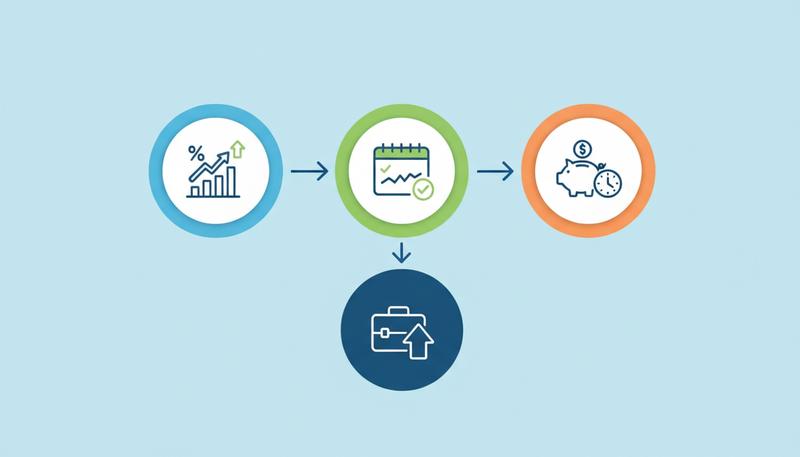
One last thing worth saying plainly: going full-time is not the success marker. Plenty of people run exceptionally profitable side hustles for years without ever leaving their jobs — because they like their jobs, because the stability matters to them, because they value what the job provides beyond a paycheck. The side hustle is successful the moment it's reliably generating income and value, regardless of whether you eventually quit anything.
The goal isn't to graduate to full-time entrepreneurship. The goal is to build something sustainable that works for your life. Sometimes that means going full-time. Often it means having a well-managed second income stream that opens up choices you didn't have before. Both are valid endings.
The difference between the people who make it to that point and the ones who flame out somewhere in the middle almost always comes down to the unsexy fundamentals covered in this section: protecting consistent building time, managing energy intelligently, staying on the right side of your employment agreements, keeping your tax situation clean, and taking rest seriously enough to still be building two years from now.
None of it is complicated. All of it requires actually doing it.
Only visible to you
Sign in to take notes.