Science & Engineering
Physics, chemistry, biology, space, and how things work.
 mixed
Your Brain on Music: The Neuroscience of Listening and Playing
Much of what you hear in music isn't in the sound. In eight lectures, find out how your brain builds a note, predicts the next one, supplies the beat and answers its own predictions with a reward, and what playing an instrument does and doesn't do to that machinery. Along the way: a cockatoo who dances, a pianist whose hand stopped obeying, and famous findings that shrank when someone checked.
 intermediate
Which Part of the Brain Controls What? A Beginner's Guide to Brain Science
A plain-language tour of the human brain, region by region and system by system, that answers a deceptively simple question: which part controls which behavior? You'll learn how movement, emotion, language, attention, and self-control are built from cooperating brain structures — and why 'one region, one job' is mostly a myth.
 intermediate
Terraforming Mars: Can We Really Make the Red Planet Habitable?
A clear-eyed tour of one of the boldest ideas in science: turning Mars into a world humans could live on. We trace terraforming from pulp science fiction to peer-reviewed research, weigh the hard physics against the latest engineering and biology, and ask what's actually achievable in our lifetimes versus what stays a multi-century dream.
 intermediate
Physics, Chemistry, and Biology: One Story at Three Zoom Levels
A plain-language tour through the three foundational sciences — what they ask, how they answer, and why they're really one connected story about the same universe at different magnifications. No background required, no equations to memorize.
 intermediate
Your Nervous System: How Your Body Decides You're Safe
A plain-language journey through the human nervous system — from the single neuron firing in your fingertip to the ancient circuitry that decides, beneath your awareness, whether you are safe or in danger. The course connects classical neuroscience, the autonomic nervous system, the stress response, and polyvagal theory into one working map of why you feel what you feel.
 intermediate
Fungi Explained: The Hidden Kingdom That Shapes Our World
A guided tour through the strange, sprawling kingdom of fungi — what they are, how they live, and why they shape your dinner, modern medicine, the forest, and the planet's future. Built for curious listeners with no biology background, this course goes deep without ever needing a picture.
 mixed
Cognitive Science: How the Mind Perceives, Remembers, and Decides
A rigorous yet accessible deep-dive into the science of how your mind constructs reality. Drawing on cognitive psychology, neuroscience, and behavioral economics, this course explores perception, attention, memory, and decision-making — explaining not just what the mind does, but why it works that way and how you can use that knowledge every day.
 mixed
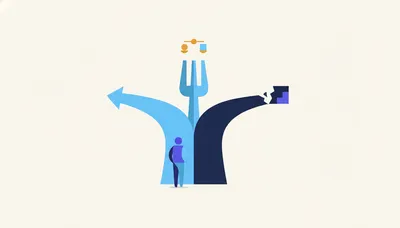
The Physics of Everyday Things: Why the World Works the Way It Does
A deep, intuitive dive into the hidden physics governing the objects and phenomena you encounter every day — from why bridges don't collapse and why kettles make noise, to why the sky is blue and how refrigerators create cold from heat. No calculus required, just genuine curiosity and a willingness to see the familiar world in a completely new way.
 mixed
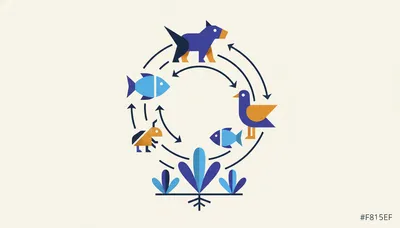
Game Theory for Real Life: Strategy, Cooperation, and Why People Defect
A deep, engaging journey through the mathematics and psychology of strategic decision-making. From the Prisoner's Dilemma and Nash Equilibrium to auctions, signaling, and evolutionary dynamics — learn how game theory explains arms races, negotiations, social norms, and the everyday choices people make when their outcomes depend on what others do.
 mixed
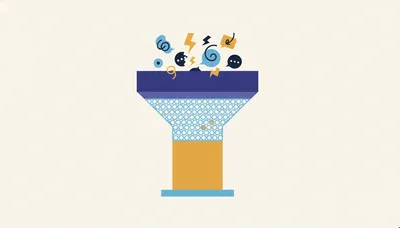
Ecological Thinking: Systems, Feedback Loops, and the Logic of Living Worlds
A deep dive into ecology as a framework for understanding complex, interconnected systems — from energy flows through food webs to why ecosystems collapse and recover. This course equips systems thinkers with the scientific vocabulary and mental models of ecology: trophic levels, feedback loops, niches, resilience, succession, nutrient cycling, and the adaptive cycle. It also shows how these ideas translate beyond biology into economies, organizations, and knowledge systems.
 mixed
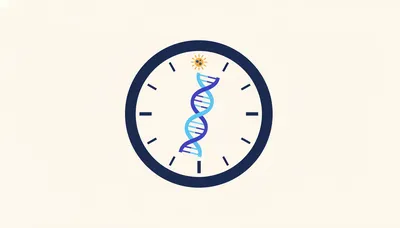
Nutrition Science Without the Noise: What Research Actually Says About Food
A rigorous, evidence-minded tour through peer-reviewed nutrition science — cutting through diet culture, media hype, and industry influence to understand what we genuinely know (and don't know) about metabolism, macronutrients, micronutrients, and eating well. Built for skeptical, curious learners who want to understand the actual science rather than the headlines.
 mixed
The Biology of Aging: What Science Actually Knows About Why We Get Old
A rigorous yet accessible deep-dive into the cellular and molecular science of aging — from evolutionary theories and the Hayflick limit, to telomeres, epigenetic clocks, cellular senescence, and the mTOR pathway — separating well-supported science from longevity hype.
 intermediate
The Statistical Mind: How to Think Clearly About Evidence, Uncertainty, and Scientific Claims
A conceptually rich, formula-light introduction to statistical thinking that builds genuine intuition for evaluating evidence. Covering probability, distributions, hypothesis testing, effect size, Bayesian reasoning, and the replication crisis, this course teaches readers to read scientific claims critically — from nutrition headlines to AI benchmarks — without requiring a background in mathematics.
 mixed
The Human Gut: Microbiome Science and What It Actually Means for Your Health
A rigorous but accessible tour through the science of the gut microbiome — what it is, how it develops, what disrupts it, and what the current research genuinely supports versus what's hype. You'll come away with a clear-eyed framework for evaluating probiotic claims, dietary advice, and the emerging gut-brain connection.
 intermediate
Quantum Computing Unlocked: A Plain-English Guide to the Technology That Will Change Everything
A beginner-friendly deep dive into quantum computing that explains — without math or jargon — what quantum computers actually are, how they work, and why they matter. Designed for curious high schoolers and non-technical adults who want to genuinely understand one of the most important technologies being built today.
 intermediate
How Your Brain Works: A Plain-Language Guide to Neuroscience
A friendly, jargon-free audio guide to how the brain is built, how it communicates with itself, how it learns and changes, and what the latest science is revealing about our most mysterious organ. No biology background required — just curiosity. By the end, you'll understand the real machinery behind everything you think, feel, remember, and do.
Other Topics
Want a Science & Engineering course that doesn't exist yet?
Tell us what you want to learn and upvote what others have requested.
Request a Science & Engineering Course