Archive Diving: A Practical Guide to Researching History Using Primary Sources
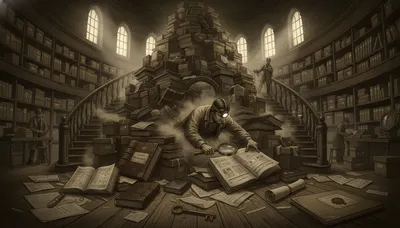
A hands-on course for anyone who wants to find out what actually happened — using census records, historical newspapers, court documents, government files, and institutional archives. Whether you're tracing a family line, writing local history, doing investigative journalism, or just satisfying a deep curiosity, this course teaches you how to locate, read, and critically evaluate primary sources in both physical archives and major digital repositories.
Sign up free to unlock:
- Track your progress across courses
- Request & vote on new courses
- Highlight text, take notes & bookmark
- Get personalized recommendations
- Build your public learning profile
Already have an account? Log in
Course Content
Sources & References
This course draws from the following sources. Visit them for additional depth.
- 🔗
- 🔗
- 🔗
- 🔗
- 🔗
- 🔗
- 🔗
- 🔗
- 🔗
- 🔗guides.lib.purdue.edu — C ↗webpage
- 🔗archives.gov — Census ↗webpage
- 🔗
- 🔗foia.gov — Faq ↗webpage
- 🔗
- 🔗archives.gov — Research ↗webpage
- 🔗
- 🔗
- 🔗
- 🔗
Students Also Studied
 mixed
mixedThe Oral Tradition: Storytelling, Memory, and Culture Before Writing
A deep exploration of how human societies encoded knowledge, history, law, and identity through spoken word, song, and ritual before the invention of writing — and what these traditions reveal about memory, community, and the nature of narrative itself. From Aboriginal songlines to Homeric epics to West African griots, this course examines oral tradition as the original technology of the human mind.
 mixed
mixedPublic Records & Open-Source Research: Find What's Actually Out There
A practical, no-jargon guide to locating and interpreting publicly available records — property filings, court documents, corporate registrations, FOIA requests, and digital OSINT tools. For journalists, genealogists, small business owners, and anyone who wants to verify what they're told, with no legal or technical background required.
 intermediate
Before It's Too Late: The Complete Guide to Recording Your Family's Oral History
A step-by-step course teaching anyone — regardless of technical experience — how to capture the stories of family members before those stories are lost forever. From the first awkward question to the final archived file, this course walks you through every stage of a meaningful oral history project. No journalism degree, no fancy equipment, and no prior experience required.
Want a course that doesn't exist yet? Request one →