Why games matter: the hidden logic of play
So what is a game, exactly? I said earlier that games are structured systems for making interesting decisions — and that's true. But now we need to get specific about why that matters, and what you're actually looking at when you sit down to play something. Not in a "let me recite a dictionary definition" way. I mean — what actually separates a game of chess from watching a chess match on YouTube? What makes Monopoly a game but a birthday party a party? Why does Wordle feel like a game when reading a mystery novel — also full of puzzles and tension — feels like something categorically different?
Most people have never stopped to think about this. Honestly, why would you? Games are just there, woven into childhood and adulthood the way oxygen is woven into air. But here's the thing: if you want to build games — which is exactly where this course is heading — you need to understand the machinery underneath. You need to see the decision-making at work. Because the moment you understand how games function as systems for meaningful choices, you can reverse-engineer that understanding into something you can build yourself. That's the thread we'll pull: game theory (the academic science of decision-making under competition) and game design (the craft of building compelling interactive experiences) turn out to be two perspectives on the same underlying thing. One describes the machinery. The other builds it.
So let's get concrete. What actually is a game?
Defined rules — this is what separates a game from free play. A child splashing in a puddle is playing. A child playing Marco Polo is gaming. The rules create constraints, and here's the counterintuitive part: those constraints are exactly what makes games interesting. A blank canvas feels more intimidating than one with some shapes already sketched in. Rules narrow the possibility space into something you can actually navigate. They also create fairness — everyone operates under the same constraints, which is why we feel cheated when rules are broken.
Optional participation — you can quit. This matters more than it sounds. The "optionality" gives games their psychological power: you're choosing to be there, choosing to accept the stakes. When real stakes enter the picture — actual money on the line, status on the table, safety at risk — games often stop feeling like games. The tension between this and the fact that games can simulate real stakes (sports injuries are real, gambling losses are real) is endlessly fascinating, and we'll circle back to it.
Meaningful choices — this is the heart of it. A slot machine has rules and structure and uncertainty, but most game designers would tell you it barely qualifies as a game because the "choices" (pull the lever, pick your bet) don't really matter in any strategic sense. Compare that to a single turn in Slay the Spire, where you might spend three minutes deciding whether to burn your energy on a block card or an attack card, factoring in what you know about the enemy you'll face next. That's a meaningful choice. It demands judgment, carries consequences, and makes you feel clever when you get it right.
Uncertain outcome — if you already know who's going to win, you're watching a performance, not playing. Uncertainty is the engine of tension. It's why a basketball game between evenly matched teams is gripping and a blowout is dull. Interestingly, game theory explicitly focuses on strategic uncertainty — situations where the outcome depends not just on your moves but on what other players choose to do. That's a specific and fascinating flavor of uncertainty we'll dig into deeply.
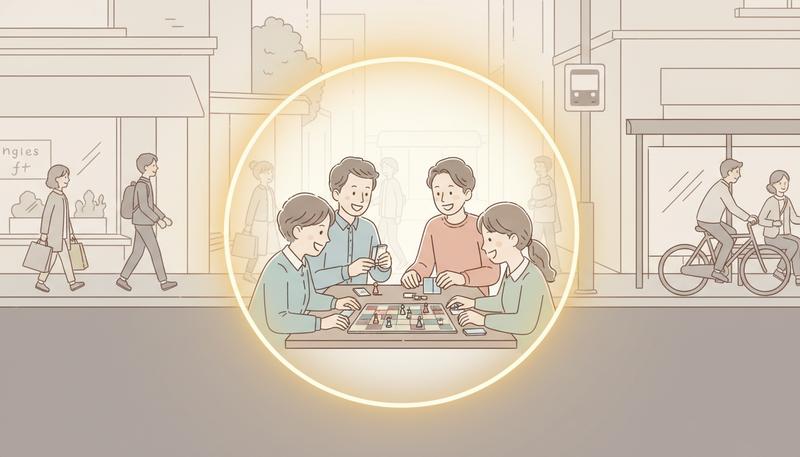
The Spectrum of Play
But what about activities that feel game-like without quite fitting our definition? It's worth mapping the territory, because knowing what a game isn't clarifies what it is.
Pure play — no rules, no goal, no structure. Children building with sand, doodling, improvising stories with toys. Pure play is developmentally important and psychologically rich, but it's not a game. The freedom is the whole point.
Puzzles — structured, rule-bound, goal-oriented, but typically with one correct solution and no meaningful interaction with other players. A crossword puzzle is closer to a game than pure play, but the "decision space" is narrow: you're solving, not strategizing. (Some puzzles blur this line, and puzzle design is a whole discipline in its own right.)
Sports — unambiguously games by our definition, with the interesting addition of physical skill as a variable alongside strategy. Sports are also some of the most-studied domains in game theory, because the strategic decisions (should a soccer team defend deeper or press higher?) map almost perfectly onto the formal game-theoretic models we'll meet in Chapter 2.
Gambling — partially games, partially random outcome machines. The interesting cases are poker and sports betting, where skill and information genuinely shape outcomes. Pure chance games like roulette or slots are games in a loose cultural sense but don't offer the strategic decision-making that makes games theoretically interesting.
Interactive fiction and narrative games — this is where things get contested in game design circles. If you're reading a choose-your-own-adventure story, are you playing a game? The choices might feel emotionally "meaningful" but don't create the competitive or strategic tension our definition implies. Good game design requires that experiences be emotionally engaging through the structure of choices — not just alongside it.
The important thing isn't to be pedantic about boundaries. It's to notice that games occupy a specific region of the entertainment landscape precisely because they are decision-making machines. That specificity is what makes them worth studying.
Why Are Games So Compelling? (The Short Answer)
You've almost certainly had the experience of looking up from a game and realizing two hours have evaporated. Or being genuinely angry at a chess position, as if the board had personally insulted you. Or lying awake at night replaying a hand of poker you misplayed three years ago.
Games do something to our brains that books, films, and music do differently or not at all. Why?
Agency. You're not watching someone else make choices — you are. The outcome depends on you, which means your brain treats it as genuinely consequential. When you win, it's because you made smart decisions. When you lose, your brain files it as something to fix. What's sneaky is that designers sometimes manufacture this feeling even when the underlying system is tilting things behind the scenes — adjusting difficulty on the fly, quietly giving a struggling player better odds, engineering a comeback that feels earned. The illusion of control and real control produce almost identical psychological responses. That's a powerful tool in the hands of someone who knows how to use it.
Feedback loops. Good games give you immediate, clear information about whether your choices are working. Score goes up. Enemy health drops. Economy grows. Your brain finds this intensely satisfying — it's the same dopamine circuitry that responds to learning. You try something, you get feedback, you update your model of what works. Repeat. This is why game loops are so central to good game design — the loop is the feedback cycle that keeps players engaged.
Safe risk. Games let you experiment with failure in a consequence-free environment. You can go bankrupt in Monopoly without actually losing your home. You can die in Hades and try again armed with new knowledge. This is one reason games are such powerful learning environments — the stakes feel real enough to matter, but the consequences are bounded.
Social complexity. Many games are fundamentally about modeling other people's minds. What will my opponent do? What do they think I'll do? What do they think I think they'll do? This recursive social reasoning is genuinely intellectually demanding, and humans find it engaging in ways that go very deep. It's also, not coincidentally, exactly what game theory was invented to study.
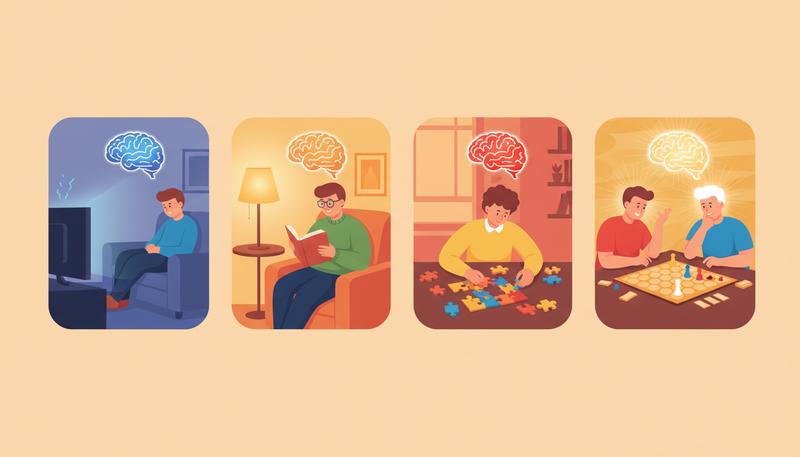
Games as Decision-Making Machines
Here's the idea that ties this whole course together, and I want to sit with it for a moment because it's genuinely mind-expanding once it clicks.
Every game is, at its structural core, a decision space — a carefully designed environment where interesting choices produce meaningful consequences. The game designer's job is to architect that space. The game theorist's job is to analyze how rational agents navigate it. The player's job is to actually live in it.
Think about chess. The rules are simple: pieces move in defined ways, the king must be protected, pawns promote. But from those simple rules emerges a decision space so complex that game theorists classify it as a game of perfect information — both players see everything — and yet it remains strategically inexhaustible. Computers have never enumerated all possible chess games and this remains computationally infeasible. The game tree complexity of chess is estimated at around 10^120 possible variations, which no computer could enumerate even theoretically., and even now, grandmasters describe the experience as profoundly creative, not mechanical.
Or take Poker. Same basic structure: defined rules, cards represent information, betting represents commitment. But here the decision space is shaped by imperfect information — you don't know your opponents' hands. Now every bet is a signal. Every fold tells a story. Every bluff is a claim about the world that may or may not be true. Game theorists have built entire models around exactly this kind of situation.
Or tic-tac-toe. The decision space there is solved — we know the optimal strategy for both players, and it always produces a draw if both play correctly. This is why tic-tac-toe stops being interesting around age seven: there's nothing left to discover. The decision space has been fully mapped.
This is a profound design insight: the richness of a game is directly proportional to the richness of its decision space. Not the complexity of its rules. Not the quality of its graphics. Not the elaborateness of its story. The number of interesting decisions a player gets to make, and how much those decisions matter.
graph TD
    A[Rules & Constraints] --> B[Decision Space]
    B --> C[Player Choices]
    C --> D[Consequences & Feedback]
    D --> E[Updated Strategy]
    E --> C
    B --> F[Uncertainty & Risk]
    F --> C
This is why game theory — a branch of mathematics originally developed to understand economics and warfare — turns out to be so directly applicable to game design. Game theorists built rigorous tools for analyzing decision spaces: how agents should behave under different conditions, what happens when interests conflict, how cooperation can emerge, when deception is rational, how uncertainty changes everything. Game theory was developed precisely because economics, like games, involves interdependent decisions where each player must anticipate the moves of others.
If you're building a game, you're building a decision space. Understanding how people navigate decision spaces — which is exactly what game theory teaches you — is one of the most powerful tools you can have.
Two Sides of the Same Coin
This course is structured around two disciplines that are rarely taught together, and the pairing is not arbitrary.
Game theory is the science of strategic decision-making. It asks: given that multiple agents are making choices that affect each other, what does rational behavior look like? What outcomes does it produce? When do individual rational decisions lead to collectively terrible outcomes? (Spoiler: way more often than you'd expect. The Prisoner's Dilemma is waiting for you in Chapter 3, and it will change how you see the world.) Game theory emerged from mathematics and economics — Von Neumann and Morgenstern built the foundations, John Nash formalized key concepts in the 1950s — but it's been applied to evolutionary biology, political science, military strategy, and yes, the design of actual games.
Game design is the craft of building decision spaces. It asks: how do you structure rules, mechanics, and systems so that players face genuinely interesting choices? How do you create challenge without frustration, fairness without boredom, complexity without confusion? Game design is about crafting meaningful experiences — moments of excitement, challenge, curiosity, good frustration, and satisfaction. It's part engineering and part psychology, deeply empirical, and ultimately human — because every design decision is a hypothesis about what players will find interesting.
Here's why they need each other: game theory without design is just abstract math. Game design without game theory is intuition without a framework. Together, they let you understand not just what to build but why it should work — and when players behave unexpectedly, you have the conceptual tools to figure out what went wrong instead of just shrugging and changing things at random.
How to Use This Course
Here's the honest description of what you're signing up for, and how it's structured.
The first two-thirds of the course are about building genuine understanding. We start with game theory — Nash equilibria, dominant strategies, cooperation, the maddening logic of the Prisoner's Dilemma — and then move into the craft of game design: mechanics, feedback loops, systems thinking, balance, and player psychology. These aren't detours from making games; they're the intellectual foundation that will make everything you build more intentional. Skipping to "just build something" without this grounding is like trying to write a novel before you understand how sentences work. You can do it, but you'll spend a lot of time confused about why things aren't landing.
The final four chapters shift into a dedicated, hands-on building phase. You'll go from concept to prototype to playtested, iterable game — in that order, with structured exercises at every step. By the end, you won't just have an idea for a game. You'll have a real, playable thing that you built, tested, and improved based on what you learned watching other people play it.
A few principles to carry through the whole course: Start analog. Even if you dream of making video games, your first prototype should work with paper and index cards. This removes technology as a variable and lets you focus entirely on the design. Professional video game designers do this too. Embrace ugly. The goal of a prototype isn't to be good — it's to answer a question. "Does this mechanic feel interesting?" is a question. You only get the answer by building something and watching someone play it. Treat confusion as data. When a mechanic doesn't work, when players do something unexpected, when your elegant system produces a boring game — that's not failure. That's the most useful information a designer can get.
The through-line throughout is the course's central truth: understanding why players make choices is the secret that separates good game designers from great ones. Everything else — the theory, the craft, the prototyping — serves that single insight.
Let's start pulling that thread.
Ready? Chapter 2 introduces game theory — and fair warning, by the time we finish the Prisoner's Dilemma in Chapter 3, you'll start seeing strategic traps everywhere. In conversations, in workplace dynamics, in how cities are designed. That's normal. Lean into it.
Only visible to you
Sign in to take notes.