How to Keep Your Critical Thinking Skills With AI
Critical Thinking in the Age of AI: Don't Outsource Your Judgment
You now have the metacognitive tools to know what you actually understand about your own thinking. But knowing what you know is only half the problem. The other half is knowing what to trust — and that's where critical thinking enters.
There's a particular kind of intellectual vertigo that hits when you ask an AI a question, get a beautifully confident answer, and then discover — sometimes embarrassingly later — that it was entirely wrong. The AI cited a paper that doesn't exist. It got the date wrong by a century. It invented a quote and attributed it to a real person who said nothing of the sort. Your instinct might be to feel betrayed. But here's the thing: that moment of wrongness is actually one of the most valuable training opportunities AI will ever give you — but only if you're equipped to recognize it as one. That recognition depends on critical thinking: the ability to evaluate claims independently, without outsourcing your judgment to the machine's fluency.
In the last section, you learned to ask yourself: "Am I using this because I understand it, or because it sounds right?" That's metacognition. Now we're asking a complementary question: "Is this correct, regardless of how I feel about understanding it?" The first question keeps you honest about your own learning. The second keeps you honest about the world. Together, they form the immune system that lets you use AI as a genuine tool rather than a substitute for thinking.
What Critical Thinking Actually Does
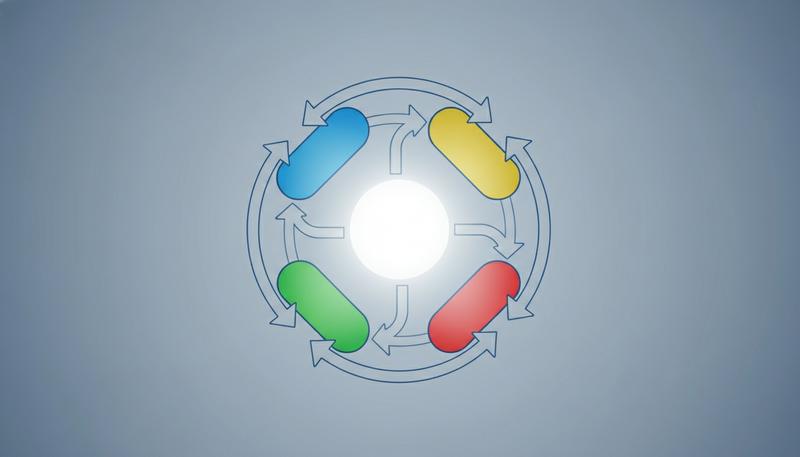
Critical thinking isn't just skepticism — though skepticism is part of it. It's the ability to do four specific things that AI makes dangerously easy to skip:
Intellectual skepticism. This is the habit of not automatically trusting anything presented fluently, no matter how confident it sounds. AI is good at confidence. It is not reliably good at accuracy. Most people mistake fluency for credibility, and that trust is systematically misplaced.
Evidence evaluation. Critical thinking requires not just finding information but weighing it — asking where it comes from, what incentives shaped it, how strong the methodology is. AI frequently short-circuits this by presenting synthesized "answers" that flatten the actual complexity and disagreement in the underlying evidence. You get the conclusion without the messiness that would help you calibrate your confidence.
Argument construction. Building an argument from scratch — structuring your reasoning, anticipating objections, deciding what's actually relevant — is a cognitive muscle. If you're always asking AI to "write a persuasive argument for X," that muscle atrophies. You become a consumer of arguments rather than a builder of them.
Epistemic self-awareness. This is knowing what you know, what you don't know, and the difference between the two. [AI, as Scott Young observes, has "underdeveloped metacognitive ability to know what it doesn't know."](https://www.scotthyoung.com/blog/2023/05/02/chatgpt-learning-tips/) If you're offloading reasoning to a system that's confidently wrong without knowing it, your own capacity to accurately map the boundaries of your knowledge gets eroded too.
AI Hallucinations Are a Training Opportunity
Here's the reframe that changes everything: hallucinations aren't primarily a flaw to route around. They're the universe handing you free critical thinking practice.
Every time an AI makes something up, you have the opportunity to catch it — or not. If you catch it, you've exercised skepticism, done verification work, and reinforced the habit of not treating any source as automatically trustworthy. If you don't catch it, you've been reminded (when you discover the error later) that your critical faculties were asleep. Either way, the feedback loop is valuable.
[Harvard educators asked to weigh in on AI and cognition consistently emphasize that the issue isn't AI itself — it's how actively engaged your own mind is during the interaction. Tina Grotzer, a principal research scientist in education at Harvard's Graduate School of Education, argues that human minds are "better than Bayesian" in important ways, capable of detecting exceptions and anomalies that a pure statistical approach would miss.](https://news.harvard.edu/gazette/story/2025/11/is-ai-dulling-our-minds/) The problem is that we tend to not deploy those superior capabilities when we're passively consuming confident-sounding output.
The practical move: treat every AI response as a draft from a very smart, occasionally delusional intern who cannot be fired. You wouldn't submit an intern's work without reading it. Don't submit AI work without evaluating it either.
Remember: An AI's confidence is not evidence of accuracy. The system is optimized to produce fluent, plausible-sounding text — not truthful text. Treat confidence and accuracy as completely independent variables.
The SIFT Method: A Framework for Evaluating AI Output
Media literacy educators developed the SIFT method for evaluating information online, and it maps beautifully onto AI evaluation. SIFT stands for:
Stop. Before you accept or share information, pause. The instinct to immediately build on AI output — to take it as the foundation and keep going — is natural but dangerous. The pause is what makes critical evaluation possible.
Investigate the source. With AI output, this means asking: where would this claim come from? What domain is this? How verifiable is it? If the AI cites specific papers, specific statistics, or specific quotes, those are your highest-priority verification targets — because those are exactly the things AI fabricates most fluently.
Find better coverage. Don't just accept what the AI says about a topic. Do a quick lateral search to see what authoritative sources actually say. This doesn't mean Googling the AI's exact claim (which mostly returns AI-generated content agreeing with itself). It means looking at primary sources and expert consensus.
Trace claims, quotes, and media. If an AI gives you a specific piece of evidence — a statistic, a quotation, a study finding — trace it to its original source before using it. This is non-negotiable for anything important.
graph TD
    A[Receive AI Output] --> B{Stop — Pause Before Accepting}
    B --> C[Identify Key Claims & Citations]
    C --> D[Investigate Sources — Are They Real?]
    D --> E[Find Independent Coverage]
    E --> F{Claim Verified?}
    F -->|Yes| G[Use with Appropriate Confidence]
    F -->|No| H[Revise or Discard]
    F -->|Uncertain| I[Flag & Research Further]
The most important item on that list is the third one: trace specific claims. In practice, this means having a rule: any statistic, any direct quotation, and any specific study cited by AI gets verified before you use it. Full stop. This isn't paranoia — it's basic epistemic hygiene for working in an environment where your primary tool has a known confabulation problem.
Lateral Reading: How Professional Fact-Checkers Actually Work
Professional fact-checkers don't read a document and evaluate it from the inside. They do what researchers call "lateral reading" — they immediately open new tabs and start reading about the source from other sources, rather than reading the source deeply.
The insight behind this is counterintuitive: spending more time reading a potentially unreliable source doesn't help you evaluate it, because you're evaluating it on its own terms. You need outside perspective. You need to know what credible third parties say about the claim, the source, or the domain.
Applied to AI output, lateral reading looks like this:
- Identify the central factual claims in the AI's response — not the whole thing, just the load-bearing assertions.
- Open a new tab and search for those claims directly in authoritative sources — not "is the AI right about X" (which will return AI-generated content) but "X [primary source]" or "X research evidence."
- Check what domain experts say about the topic area, independent of what the AI told you.
- For anything genuinely important, look for the primary source — the original study, the official statistic, the actual law or policy document.
This might sound slow. It isn't, once you develop the habit. Experienced researchers can do a quick lateral read in under two minutes for most claims. The skill is in knowing which claims are load-bearing (and thus worth checking) and which are low-stakes background that can be provisionally accepted.
Tip: When AI cites a paper, copy the exact title into Google Scholar before you use it. AI-fabricated citations have a distinct tell — the paper title often sounds extremely plausible, exactly right for the topic, like the paper you'd want to exist. That plausibility is precisely what makes fake citations hard to catch without checking.
Confirmation Bias in Your Prompts
Here's an uncomfortable truth about AI interactions: the answers you get are shaped, more than you probably realize, by how you ask the question.
If you ask "Why is intermittent fasting effective for weight loss?", you'll get a well-reasoned explanation of why it's effective. If you ask "What are the limitations of intermittent fasting for weight loss?", you'll get a well-reasoned discussion of limitations. Both responses will be fluent and convincing. Neither will spontaneously offer the other perspective.
This is confirmation bias with a structural twist. Human confirmation bias is a cognitive glitch — we unconsciously seek information that supports what we already believe. AI-amplified confirmation bias is more systematic: the framing of your prompt determines the framing of the answer, and if you always prompt from your existing perspective, you'll consistently get outputs that confirm it.
MIT Horizon researchers note that this is precisely why evaluating AI output requires active effort rather than passive reception. The tool amplifies whatever epistemic posture you bring to it. Bring skepticism, and it helps you stress-test ideas. Bring a conclusion you've already reached, and it will enthusiastically build the case for you.
The practical fix is deceptively simple: write your important prompts twice — once from the angle you're naturally inclined toward, and once from the most serious opposing angle. Compare the outputs. If the AI can construct an equally compelling argument from both directions, that's a signal that the evidence base is contested and you shouldn't be too confident in either direction.
The Steel-Man Technique: Using AI to Argue Against Yourself
One of the most intellectually honest things you can do is genuinely engage with the strongest version of the argument you disagree with. Not the strawman — the weakest, most ridiculous version — but the steel man: the best possible case for the opposing position.
Humans are terrible at this naturally. We're motivated to find the flaws in arguments we disagree with and gloss over the flaws in arguments we agree with. This is just cognitive tribalism doing its job.
AI is weirdly good at steel-manning on command — precisely because it doesn't have a stake in being right the way humans do. You can instruct it: "I believe X. Give me the strongest possible argument against X — the best version of the case a smart, informed person who disagrees with me would make. Don't hedge, don't give me the weak objections. Give me the real case."
Then you have to actually engage with what comes back. This is the part where your critical thinking does work. The AI gives you the opposing argument. Your job is to evaluate it genuinely — to decide whether it changes your view, whether you can answer it satisfactorily, or whether it reveals genuine uncertainty in your position that you'd been glossing over.
The goal isn't to change your mind for the sake of it. The goal is to know your position well enough to have considered the real objections. Reflecting after AI interaction — asking yourself which elements align with your thinking and which don't — is what transforms AI use from passive reception into active intellectual development.
Red-Teaming Your Own Reasoning
Red-teaming is a practice borrowed from security and military thinking. You identify potential vulnerabilities in your own plans by having a team try to attack or undermine them — adversarially, systematically, without mercy.
You can do this with your own arguments and conclusions using AI as the adversary.
The protocol:
- State your position clearly in a prompt — what you believe and your main reasons for believing it.
- Ask the AI to red-team it — specifically: "Act as an intelligent, well-informed skeptic. What are the three or four most serious weaknesses in this reasoning? Where am I relying on assumptions that might not hold? What evidence would change this conclusion?"
- Take the output seriously — don't just look for the critiques you can easily dismiss. Pay attention to the ones that feel uncomfortable.
- Revise or reinforce — either update your reasoning to address the valid critiques, or explicitly articulate why you're not persuaded by them.
This is using AI as a genuine thinking partner rather than a conclusion-delivery machine. It maintains cognitive engagement — your brain is actively working throughout — while leveraging the AI's ability to construct adversarial arguments it has no emotional investment in softening.
Warning: The red-team technique only works if you've already formed your own view before prompting. If you ask AI to evaluate a position you haven't really thought through yourself, you'll get red-teaming without the anchoring of your own judgment — and that can leave you confused rather than clarified. Think first. Then bring in the adversary.
Forming Opinions vs. Testing Opinions: A Critical Distinction
This is perhaps the most important conceptual line in this entire section, so it deserves to be stated plainly.
Using AI to form your opinions: You approach a topic with an open question, feed it to the AI, receive an answer, and adopt it as your view. Your critical thinking is essentially bypassed. You're cognitively passive. The opinion you now hold was not really formed by you.
Using AI to test your opinions: You approach a topic, do some actual thinking — reading, reflection, your own reasoning — arrive at a tentative view, and then use AI to stress-test it, seek counter-arguments, identify weaknesses, and pressure-check your evidence. Your critical thinking is actively engaged throughout. The opinion you refine or confirm is genuinely yours.
The difference isn't which AI tool you use or how smart the prompts are. The difference is when in the reasoning process the AI enters. Late-stage AI involvement — after you've done your own cognitive work — is almost always more productive for both learning and intellectual development than early-stage involvement, where the AI does the cognitive heavy lifting before you've had a chance to exercise your own judgment.
[Harvard researchers studying AI's cognitive effects consistently come back to this: the question is whether your brain is "actively engaged in making meaning." Dan Levy, Harvard Kennedy School faculty and co-author of Teaching Effectively with ChatGPT, puts it directly: "No learning occurs unless the brain is actively engaged in making meaning and sense of what you're trying to learn, and this is not going to occur if you just ask ChatGPT, 'Give me the answer.'"](https://news.harvard.edu/gazette/story/2025/11/is-ai-dulling-our-minds/)
The opinion-formation vs. opinion-testing distinction is a practical implementation of this principle. It's the difference between having the AI think for you versus having it think with you.
A Decision Framework: When to Trust, When to Verify
Not everything needs to be rigorously verified — that way lies analysis paralysis. The practical challenge is building a working heuristic for when to accept AI output with reasonable confidence and when to demand your own verification.
Here's a framework that holds up in practice:
High trust, light verification:
- Conceptual explanations of well-established, stable facts (how photosynthesis works, what the Krebs cycle is, how TCP/IP functions)
- Brainstorming and ideation, where the value is quantity and creativity, not factual precision
- Structural help — outlines, frameworks, organization — where you're evaluating logical coherence, not factual accuracy
- Code explanations and general debugging guidance (though always test the code)
Low trust, active verification required:
- Specific statistics, percentages, measurements
- Direct quotations attributed to named individuals
- Citations to specific papers, books, or studies
- Recent events, current data, anything time-sensitive
- Medical, legal, or financial specifics where errors have consequences
- Claims about minority perspectives or contested empirical questions
The special case of your domain of expertise: If you know the domain well, you can often calibrate AI output by feel — you'll notice when something doesn't ring true. Outside your expertise, your intuitions about plausibility are unreliable, and you should weight verification more heavily, not less. [MIT Horizon researchers specifically caution that "being experts in their particular fields will not protect [people] when evaluating false or misleading claims in areas outside their expertise."](https://horizon.mit.edu/insights/critical-thinking-in-the-age-of-ai) This is the expertise transfer problem: critical skills don't automatically port across domains.
graph LR
    A[AI Output] --> B{Is this factual or conceptual?}
    B -->|Conceptual| C{Is domain stable and well-established?}
    B -->|Specific fact/stat/quote| F[Verify — Required]
    C -->|Yes| D[High Trust — Light Check]
    C -->|No or Uncertain| E[Moderate Trust — Spot Check]
    D --> G[Use with Confidence]
    E --> H[Cross-reference Key Claims]
    F --> I[Find Primary Source]
Building Critical Thinking Habits Into Every AI Interaction
The risk of treating critical thinking as a separate activity — something you do after using AI — is that it never actually happens. The verification step gets deprioritized when you're busy. The steel-man exercise feels like extra work when you've got a deadline.
The better approach is to build critical thinking into the structure of your AI interactions, so it's not optional. A few habits that accomplish this:
The "one thing I'd check" habit. Before you close any AI conversation where you've received factual information, identify one specific claim you'd want to verify if the stakes were higher. Then actually verify it, even when the stakes feel low. This keeps the verification muscle warm.
The "what's missing" prompt. After you receive an AI answer on any substantive topic, follow up with: "What important considerations, counterarguments, or complications did you leave out?" This counteracts the AI's tendency to present a clean, complete-seeming answer that conceals genuine complexity.
The "where are you uncertain" prompt. Ask the AI to flag its own uncertainty: "On a scale of confidence, how sure are you about the specific claims in that response? Where might you be wrong?" AI responses to this are imperfect, but they often surface the right things to double-check.
The no-AI opinion pause. For any significant question — professional, personal, political — make it a practice to form your own initial view before consulting AI. Even five minutes of undistracted thinking first creates an anchor that lets you engage critically with whatever the AI offers.
The reflection habit. After using AI on a complex task, spend a few minutes asking yourself how it went. What did the AI get right? What felt off? Where did your judgment diverge from its output? This metacognitive review — thinking about the thinking — is what builds genuine expertise in working with AI rather than just habituation.
None of these habits require significant time. They require the right orientation: treating AI as a collaborator whose work you're responsible for evaluating, not an authority whose conclusions you adopt.
The irony of the AI era is that it makes critical thinking more important at the exact moment it makes lazy thinking more comfortable. The path through that tension is clear enough: never let AI be the last mind to touch an idea before you commit to it. Your judgment has to make the final call. Keep that judgment sharp enough to deserve the authority.
Only visible to you
Sign in to take notes.