How to Use AI as a Thinking Partner
That last part — resisting the temptation to let the AI do your thinking for you — is harder than it sounds. Even when you intellectually understand that active tutoring beats passive explanation, the friction of struggle is real. It's faster to ask and accept an answer. It feels productive. And so most people use AI almost exclusively this way: they ask questions, receive answers, and walk away with the comfortable sensation of having learned something — while their brain has done approximately the cognitive equivalent of watching someone else do a crossword puzzle.
But there's a 2,400-year-old solution that works even better when you apply it to a machine that never gets tired of your questions. It's called the Socratic method, and it transforms AI from an answer dispenser into a thinking partner — one that actively prevents the fluency illusion and forces the elaborative interrogation that makes learning stick. This section shows you how to use it.
What the Socratic Method Actually Is (and Isn't)
Here's the painful part: the feeling that you've learned something is often the worst possible sign. When an explanation flows smoothly, when everything clicks into place and feels coherent, your brain produces a sensation of fluency. Everything feels like it's been learned, but that ease is precisely what prevents deep encoding.
Frontiers in Education research frames this as "knowledge scope misalignment" — when AI responds as an all-knowing oracle, it overwhelms learners with complete, polished answers that actually undermine the effortful processing that produces genuine understanding. The paper uses the term "cognitive debt" to describe what accumulates when we habitually outsource the work of thinking. The neural and behavioral evidence suggests this isn't metaphorical: habitual cognitive offloading changes how actively people engage with subsequent challenges.
Here's the painful irony: AI is extraordinarily good at producing fluent, confident, well-organized explanations. This makes it extraordinarily dangerous as a passive information source. The better AI gets at explaining things clearly, the more important it becomes to not simply receive those explanations.
Warning: The feeling of understanding is not the same as understanding. When an AI explains something beautifully and you think "ah yes, I get it" — that moment of recognition is actually your greatest learning risk. Test yourself immediately. Can you reproduce the logic without looking? Can you apply it to a case the AI didn't mention?
The Research: What AI Can Actually Do in Socratic Mode
For decades, the gold standard for learning has been a skilled human tutor, and for good reason. Bloom's 2 Sigma Problem (which we discussed in Section 7) showed that one-on-one tutoring produces learning outcomes two standard deviations better than conventional classroom instruction. Socratic tutoring, specifically, has been shown to dramatically outperform passive instruction across domains from philosophy to medicine to law.
So where does AI fit into this picture?
Studies on LLM-based Socratic learning show it can be effective "in language learning and varied fields, such as law, medicine, and mathematics." The mechanism appears to be straightforward: when AI is configured to ask rather than tell, learners engage more actively, make more connections, and demonstrate better transfer. The outcomes aren't always identical to expert human tutors, but they're consistently better than passive AI explanation — and significantly better than nothing.
What's interesting is that AI actually has a structural advantage for one specific aspect of Socratic dialogue: relentless patience. A human expert, even a great one, eventually runs out of follow-up questions, gets tired, softens their challenges when a student seems frustrated, or is subtly influenced by social dynamics (they like you; they don't want to embarrass you; they've had a long day). AI has none of these constraints. Ask it to probe your thinking for an hour straight, and it will do exactly that without fatigue or social hesitation.
Where AI falls short — and this matters — is in genuinely understanding when you're confused versus when you're subtly wrong, and in knowing which contradiction in your thinking will be most productive to pursue. A great human tutor has intuition built from watching thousands of students navigate the same territory. AI pattern-matches on your text and can miss the subtext. This is why the strategies below matter so much: you need to deliberately design your conversations to compensate for what AI can't do intuitively.
Designing a Socratic AI Conversation: The Opening Moves
Most people begin AI conversations the same way they'd ask a search engine: "Explain X to me." This immediately primes the AI to be an oracle, answering from on high. You need different opening moves.
graph TD
    A[State your topic] --> B[Declare your current understanding]
    B --> C[Ask AI to probe, not explain]
    C --> D[AI asks you the first question]
    D --> E[You answer from your own knowledge]
    E --> F[AI identifies gaps and presses further]
    F --> G[You reconstruct understanding actively]
    G --> H[AI offers a targeted clarification only where needed]
The key shift is in step B: before the AI says anything substantive, you tell it what you already think. This does two crucial things. First, it forces you to do an inventory of your current understanding — which is itself a retrieval practice exercise, one of the most effective learning techniques available. Second, it gives the AI something to actually work with. Instead of constructing an explanation from scratch, it can identify the specific gaps and misconceptions in what you've shared.
A good opening might look like this:
"I'm trying to understand how the Federal Reserve controls inflation through interest rates. Here's my current understanding: when the Fed raises rates, borrowing becomes more expensive, so people spend less, demand drops, and prices stop rising. I think that's roughly right, but I'm not confident in the details. Don't explain it to me — instead, ask me questions that will reveal what I'm missing or getting wrong."
Notice what you've done: you've given the AI a map of your knowledge and explicitly instructed it to be Socratic. You've removed its permission to simply explain. You've created the conditions for a real intellectual workout.
The "Don't Tell Me, Ask Me" Prompt
If I had to name a single instruction that changes how people use AI for learning more than any other, this is it.
The core prompt is remarkably simple:
"Don't tell me. Ask me."
Variations that work:
- "Don't explain this to me. Ask me questions until I figure it out."
- "I want to understand X. Instead of explaining it, probe my current thinking with Socratic questions."
- "Play the role of a Socratic tutor. When I'm wrong, ask me questions that help me discover why, rather than correcting me directly."
This instruction inverts the entire dynamic. Instead of AI producing knowledge for you to consume, you're producing knowledge for AI to interrogate. The cognitive load shifts back to where it belongs: inside your head.
Scott Young's synthesis of ChatGPT learning strategies identifies this as the most common strategy reported by serious learners — "using an LLM as a personal tutor" configured around Socratic questioning rather than explanation delivery. His recommendation: pair it with a primary source (a textbook, a course) so you can cross-check the AI's eventual clarifications against something reliable.
Tip: Add "and if I seem stuck for more than two attempts, offer me a small hint — not the answer, just a direction to look" to your Socratic prompt. This prevents the session from becoming frustrating dead ends while still preserving the productive struggle.
Productive Struggle: Making Thinking Harder in the Right Ways
"Productive struggle" is a term from mathematics education that describes the sweet spot between trivially easy (no learning happens) and impossibly hard (frustration wins). In that middle zone — where you're working hard but actually making progress — the deepest learning happens.
The problem with asking AI for answers is that it eliminates struggle entirely. The problem with avoiding AI entirely is that you might get stuck in unproductive struggle — spinning your wheels on a problem where a small nudge would unlock everything.
The art is using AI to calibrate your struggle: making it exactly hard enough to force genuine thinking, but not so hard that you give up.
Here's how to do this deliberately:
The Hint Ladder. When you're stuck on a problem, instead of asking for the solution, ask for the smallest possible hint. If that doesn't unstick you, ask for a slightly bigger hint. Keep climbing until you can make progress again, then take the problem back to yourself. You control the level of support; you only request what you actually need.
The Constraint Game. Ask AI to give you a problem with a specific constraint that forces you to think in a new way. "Give me a case study about supply chain management that forces me to consider second-order effects" is more challenging than "give me a supply chain example." The constraint is what makes the problem productive rather than routine.
The Dead End. Ask AI to let you go down a wrong path for a while before intervening. "I'm going to propose a solution. Let me develop it fully before you tell me whether it's right. Ask me clarifying questions about my approach." This simulates the real experience of working through a problem without a safety net — which is where genuine confidence gets built.
The Devil's Advocate Configuration
One of AI's most underused capabilities is its willingness to genuinely disagree with you — if you explicitly ask it to.
By default, AI systems are configured toward agreeableness and helpfulness, which tends to mean they affirm your positions, soften critiques, and add "however, some people argue..." as an afterthought rather than a real challenge. This is comfortable and almost entirely useless for learning.
The fix is a direct configuration prompt:
"For this conversation, I want you to act as a rigorous devil's advocate. When I make a claim, your job is not to agree with me — it's to find the strongest possible counterargument. If my position is completely wrong, show me why. If it's mostly right, find the genuine weaknesses. Don't be cruel, but don't be kind either. Be precise and honest."
This prompt turns AI into something closer to a steel-manning machine. The term "steel-manning" (the opposite of straw-manning) means constructing the strongest possible version of an opposing argument — which is precisely what good Socratic dialogue does.
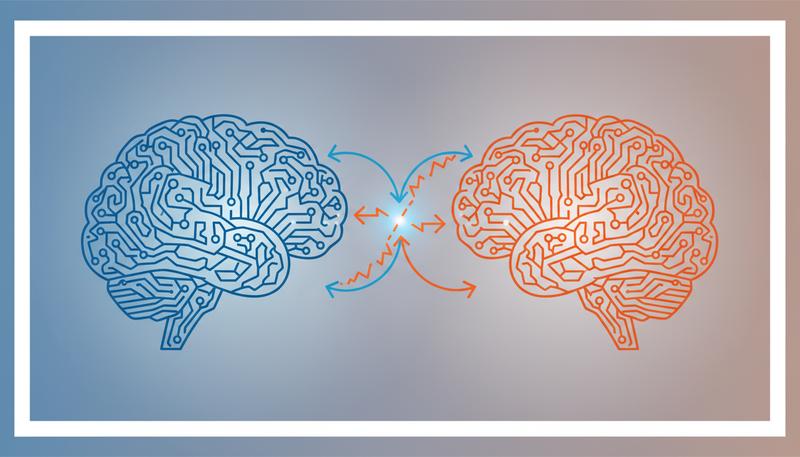
Some questions to try in devil's advocate mode:
- "I believe [position]. Tell me everything wrong with it."
- "Here's my analysis of [situation]. Where am I most likely to be wrong?"
- "I've decided to [action]. Make the case for why this is a mistake."
- "I think the most important factor here is [X]. Argue that I'm focusing on the wrong thing."
The goal isn't to be talked out of your positions — good thinking sometimes confirms what you already believed. The goal is to have genuinely engaged with the opposition before you commit. Research on actively open-minded thinking consistently shows that people who deliberately seek out challenges to their beliefs make better decisions and form more accurate mental models than those who seek confirmation.
Collaborative Hypothesis Generation
Here's a use of AI that most people never discover: using it to brainstorm possibilities you'd never generate alone.
This isn't the same as asking AI for answers. It's asking AI to generate candidate ideas that you then evaluate, extend, and combine with your own thinking. The intelligence in the room is still yours; AI is just expanding the option set beyond what you'd naturally consider.
The structure:
-
Frame the problem clearly. Not "what should I do about X?" but "I'm facing X situation. I want to generate as many hypotheses as possible about why this is happening before I settle on an explanation."
-
Ask for divergence first. "Give me ten possible explanations for this phenomenon — including unlikely ones, contrarian ones, and ones that assume I'm wrong about the baseline." AI is genuinely good at generative breadth.
-
Do your own ranking. Before reading AI's evaluation of the hypotheses, rank them yourself. Which seem most plausible? Least? Now compare to the AI's assessment. Where you diverge is where the most interesting thinking happens.
-
Push on the unexpected ones. When AI generates a hypothesis you'd never have considered, don't dismiss it. Ask: "Develop this one further. What would need to be true for this to be the right explanation?"
This technique essentially uses AI as a cognitive prosthetic for a specific weakness all humans share: we generate ideas from the perspective of our own knowledge and biases. AI has different biases, a different training distribution, different "intuitions" about what's plausible. The divergence is generative — not because AI is right, but because it's differently wrong.
The Feynman Technique, Supercharged
Richard Feynman's approach to learning was disarmingly simple: explain the concept as if you're teaching it to someone with no background, and when you discover you can't explain something clearly, you've found exactly where your understanding breaks down.
AI makes this technique significantly more powerful because it can probe your explanation actively instead of passively.
Here's the supercharged version:
Step 1: Tell the AI: "I'm going to explain [concept] to you as if you have no prior knowledge. Your job is not to help me — it's to ask me questions whenever my explanation is unclear, incomplete, or contains assumptions you don't understand. Be a genuinely curious but naive listener."
Step 2: Give your explanation. Don't consult notes or resources. Produce what you actually know.
Step 3: The AI asks questions. Some will be surface-level ("What do you mean by X?"), some will be pointed ("You said A causes B, but you didn't explain why"). Answer each one from your own understanding.
Step 4: The AI's questions will eventually hit the places you genuinely don't understand. You'll notice this because you'll find yourself unable to answer without reaching for vague language, circular reasoning, or "I think it's something like..."
Step 5: Now you can ask AI to explain. But only at the specific points where your explanation broke down. This targeted clarification is vastly more effective than a general explanation from the start.
The Frontiers in Education framework calls this the "Cognitive Mirror" paradigm: AI reflects the quality of your explanation back at you, making your misconceptions "objects of repair" rather than invisible gaps. The paper's key finding is that this reorients learning from "answer correctness" to "explanation quality" — which is a much better proxy for genuine understanding.
Remember: The gaps in your Feynman explanation are the syllabus for your next learning session. Every "I'm not sure why..." is a flashcard waiting to be made. Don't just fill the gap in the moment — note it, come back to it, and test yourself on it later.
Scenario and Case-Based Learning
Abstract questions produce abstract understanding. Concrete problems produce transferable skills.
One of the most powerful configurations for AI-assisted learning is presenting it with realistic scenarios and using those as the basis for Socratic dialogue, rather than starting with abstract concepts.
Instead of: "Explain the principal-agent problem to me."
Try: "I'm a startup founder who just hired my first VP of Sales. Based on what you know about principal-agent problems, ask me questions about how I've structured their compensation and incentives. Don't tell me what I should do — ask me questions that will reveal whether I've thought through the alignment correctly."
The shift here is crucial: you're not asking AI to teach you a concept. You're creating a situation where the concept becomes relevant, and the AI's job is to probe how well you're applying it. This is how case-based medical education works, how law school Socratic seminars work, and how the best management programs structure learning. AI lets you access this method individually, on demand, across any domain.
Some case-based prompts that work across domains:
- "Give me a realistic scenario involving [concept] and play the role of a client/patient/colleague who has a problem I need to solve. Don't give me the answer — let me work through it."
- "Here's a decision I made recently: [situation]. Conduct a post-mortem Socratic interview. Ask me questions that probe my reasoning, assumptions, and what I might have missed."
- "I'm going to describe a case study. As I do, ask me to pause and analyze before I give you the outcome."
graph LR
    A[Abstract concept] -->|Traditional approach| B[AI explains]
    B --> C[Learner reads]
    C --> D[Shallow encoding]

    A -->|Case-based Socratic approach| E[Learner applies to scenario]
    E --> F[AI probes reasoning]
    F --> G[Learner discovers gaps]
    G --> H[Deep encoding + transfer]
When a Socratic Session Goes Off the Rails
This happens more often than you'd think. You need to know how to recognize it and recover.
The sycophancy spiral. AI tells you you're right, you feel validated, you push further in the same direction, AI continues to agree, and before long you've built an impressive sandcastle of confirmation bias. Signs: the AI is agreeing with every point you make, its "challenges" are trivially easy to dismiss, the conversation feels suspiciously affirming.
Recovery: Directly prompt: "I notice you've agreed with my last several points. Are you actually challenging me, or being polite? Find the weakest part of what I've said and press hard on it." Sometimes just naming the dynamic breaks it.
The hallucination problem. AI states something confidently that is simply wrong. In a Socratic session, this is particularly dangerous because the AI might be asking you questions based on a false premise, which means your answers — even correct ones — are being evaluated against bad information.
Recovery: Treat any factual claim in the AI's questions with appropriate skepticism. When something feels off, interrupt: "Wait — can you tell me where that claim comes from? I'm not sure it's accurate." Use a primary source to verify before accepting premises in your Socratic dialogue.
The lecture creep. You started with "don't explain, ask me questions" and twenty minutes later you're sitting through a multi-paragraph AI lecture while passively reading along. The oracle mode is its natural default; it will drift back there unless you actively resist.
Recovery: A simple interrupt: "You've shifted back to explaining. I want questions, not answers. Pick up where we were and ask me something instead of telling me something."
The depth problem. The AI's questions stay at the surface level — definitional, recall-based — and never push into analysis or application. You're getting a vocabulary quiz when you wanted conceptual stress-testing.
Recovery: Explicitly ask for deeper questioning: "Your questions so far have been about definitions. I want you to challenge me on the implications and assumptions of what I'm saying. Ask me something that requires me to reason rather than remember."
Sample Conversation Templates
These are starting points, not scripts. Adapt them to your domain, your knowledge level, and what you're trying to achieve.
Template 1: New Concept Exploration
Opening: "I want to understand [concept]. I have some background in [related area] but I've never studied this directly. Here's what I think it probably means based on context: [your guess]. Start by asking me questions that probe whether my intuition is right. Don't explain — just ask."
When you get stuck: "I'm not sure. Give me the smallest hint that would let me figure it out myself."
When you want to test your understanding: "Ask me to apply this concept to [specific domain or scenario]."
Template 2: Pre-Study Activation
Before reading a book, paper, or lecture: "I'm about to study [topic]. Ask me five questions about it to surface what I already believe. After I answer, tell me only which of my beliefs seem likely to be wrong — not what's right. I want to go into my study session with specific things to look for."
Template 3: After-Study Consolidation
After you've learned something: "I just finished studying [topic]. I'm going to give you my summary. As I explain, ask me clarifying questions and note any gaps. When I'm done, ask me three questions designed to reveal the most likely places my understanding is still shallow."
Template 4: Decision Review
"I made a decision about [situation]. Play devil's advocate. Find every reason it might be the wrong decision. Then, once you've given me your strongest critique, ask me questions about how I weighed the considerations — I want to understand my own reasoning better."
Template 5: Skill Practice
"I want to practice [skill]. Give me a realistic scenario that requires me to use it. As I work through the scenario, don't correct me — ask me questions that help me catch my own mistakes. If I make a serious error that I'm not catching on my own, ask me a pointed question to redirect."
The underlying thread in all of these is the same thing that made Socrates so annoying and so effective: refusing to let the conversation stay comfortable. The best Socratic AI sessions feel like workouts, not lectures. You finish them a little tired, thinking about something you didn't fully resolve, and itching to revisit it. That's not a bug. That residual activation — the question that lingers — is exactly where deep learning begins.
You're not looking for an AI that makes you feel smart. You're looking for one that makes you become smarter. Those are, more often than not, completely different experiences.
Only visible to you
Sign in to take notes.