How to Build a Zettelkasten Using Atomicity, Linking, and Emergence
You've now read Luhmann's own account of how his system works. You've seen how he thinks about the slip box — not as a storage facility but as a thinking partner, not as a place to collect information but as a place to process it. And you've practiced the kind of active, question-driven reading that turns a difficult text into a set of usable insights rather than a set of summarized facts.
Now we need to understand the architecture underneath what makes that possible. Luhmann's essay describes the system in action, but to build your own, you need to see the principles that structure it — the design decisions that allow atomic notes to become something more than disconnected facts, that turn a pile of index cards into a thinking machine.
These principles are three: atomicity (one idea per note), linking (explicit connections between notes), and emergence (the unexpected outputs that arise from how those connections interact). They're simple to name and surprisingly difficult to practice well. But understand them not just as rules but as cognitive necessities — understand why they're the way they are — and you'll be able to build a system that actually works, troubleshoot when it doesn't, and adapt it to your own thinking style.
Why Atomicity Is Hard
There's a powerful psychological pull toward comprehensive summaries, and it's worth naming directly because it will probably be your biggest obstacle.
When you finish a book or a paper, you feel like you've completed something. The natural move is to write a summary that reflects that completion — a note that covers the main argument, the key evidence, the author's conclusions, maybe some of your reactions. It feels thorough. It feels like good work.
The problem is that a comprehensive summary serves retrieval — "what was that book about?" — not thinking. It lets you remember what you read. It does not let you use what you read.
There's also a cognitive load issue at play. When you sit down to write an atomic note about one specific idea, you have to decide: which idea? That requires you to actually evaluate the material, identify the ideas worth capturing, and rank them. That process is uncomfortable — it forces real judgment. Writing a summary feels productive while doing much less actual thinking.
Warning: The collector's fallacy is real. Saving, highlighting, and summarizing can all feel like knowledge work while actually just being information hoarding. The zettelkasten.de overview is blunt about this: "Collecting information does not increase your knowledge" The work is in the atomic capture and the linking, not the saving.
The antidote is to sit with the discomfort of asking "what is the single most important idea here?" and to resist the urge to hedge by cramming in secondary ideas. Secondary ideas get their own notes.
The Atomicity Test: Can You Title It?
Here's the most practical test for whether your note is atomic: can you give it a specific, substantive title that describes exactly what claim it makes?
Not a topical title — not "Dopamine" or "Motivation" or "Psychology of Rewards." Those are categories, not ideas. A substantive title captures the argument of the note:
- ❌ "Dopamine"
- ❌ "Notes from Thinking, Fast and Slow"
- ✓ "Dopamine signals prediction error, not pleasure itself"
- ✓ "Intrinsic motivation decreases when external rewards are introduced"
- ✓ "Loss aversion weighs approximately twice as heavily as equivalent gain"
If you can't write a specific, claim-shaped title, the note isn't atomic. It either contains multiple ideas (split it up) or it contains no fully formed idea yet (keep thinking, or park it as a fleeting note and come back).
This title test is genuinely useful in practice. When you're writing and realize you'd title a note "Various thoughts about X," that's diagnostic. You're not ready to write a permanent note yet. Something still needs to be worked out.
The principle of atomicity, as articulated by zettelkasten.de, states it this way: "put things that belong together into a single note, give it an ID, but limit its content to that single topic." The "that belong together" is doing important work — atomicity doesn't mean artificially splitting things that are genuinely one idea. It means having a clear enough sense of where one idea ends and another begins to make the call.
Principle Two: Linking
Once you have atomic notes, you can link them. But linking in the Zettelkasten sense is something different from the casual hyperlinking you might do in a document or the tagging you might do in a notes app. It's worth understanding exactly what kind of thing a link is — and what it isn't.
Links vs. Tags vs. Categories
These three things get conflated constantly, and the confusion causes real problems. Let me draw the line clearly.
Categories are buckets. You put a note about dopamine in the "Neuroscience" category, another note in "Psychology," another in "Productivity." Categories are imposed top-down, before you know what the notes will say or how they'll relate. They organize by type of thing, not by relationship between things.
Tags are slightly more flexible categories. Instead of one exclusive bucket, tags let a note live in multiple buckets simultaneously. Your dopamine note gets tagged #neuroscience, #motivation, and #psychology. Better than categories, but still organized by type rather than by relationship. Tags answer the question "what kind of thing is this?" not "how does this connect to that?"
Links are different. They're claims. When you link your note about dopamine's role in prediction error to your note about variable-ratio reinforcement schedules in slot machines, you're asserting a relationship between two ideas. You're saying: these two things connect, and here's how. The link isn't organizational — it's intellectual. It's you thinking.
This is why zettelkasten.de advises: "Set links between notes. Full-text search on its own provides not enough information. Connections will do, especially in the long run." Tags and search let you find notes. Links let you think with notes.
graph TD
    A[New Note Created] --> B{How do we connect it?}
    B --> C[Categories]
    B --> D[Tags]
    B --> E[Links]
    C --> F["Sorts into a bucket<br/>What type is it?"]
    D --> G["Adds multiple labels<br/>What topics does it touch?"]
    E --> H["Makes a claim<br/>How does this relate to that?"]
    F --> I[Organizational tool only]
    G --> I
    H --> J[Thinking tool — generates new connections]
The difference matters because it changes what you get out of your system over time. A heavily tagged system becomes a well-organized library. A heavily linked system becomes a conversation partner.
The Linking Habit: Ask Before Filing
The core habit is simple to describe: before you file a new note, ask yourself what existing notes it connects to.
Not "what category does it belong in?" Not "what tags should I apply?" — those can be afterthoughts. The primary question, asked before you do anything else, is: what already lives in my Zettelkasten that this note speaks to?
This forces three good things to happen simultaneously. First, you review your existing knowledge, which reinforces it. Second, you identify genuine conceptual relationships, which is actual thinking. Third, you build the network, which is the whole point.
In practice, this might look like: you've just written an atomic note claiming that "environments shape behavior more reliably than willpower." Before filing it, you search your Zettelkasten. You find: a note about James Clear's habit loops, a note about Thaler and Sunstein's nudge theory, a note about prison recidivism research. You link your new note to all three, and you add a brief sentence in each link describing why you're connecting them — what the connection actually is.
That sentence is crucial. A bare link says "these are connected somehow." A link with context says "the insight about dopamine prediction error explains why variable reinforcement schedules are so compelling — the brain is pattern-matching for the reward signal, not for the reward itself." Context transforms a pointer into an argument.
Bidirectional Links and the Weight of Every Connection
In a digital Zettelkasten, links are typically bidirectional — when you link from Note A to Note B, Note B automatically shows Note A as a backlink. This seems like a minor technical detail, but it genuinely changes how the system feels and works.
In a unidirectional system, you create a link and move on. In a bidirectional system, you create a link and that link shows up in the target note, which means the next time you visit the target note, you see the new connection you made. The system reflects your thinking back at you.
Bidirectional links also mean that the network is genuinely symmetric — no note is purely a "receiver" of connections. Every note can surprise you when you visit it by showing unexpected inbound connections from notes you wrote later. A note you wrote two years ago about attention span suddenly has inbound links from notes about social media design, sleep deprivation, and educational reform. You didn't plan that cluster. It grew.
Remember: Every link you create is a mini-argument. You're claiming that two ideas are meaningfully related. This is not a neutral, organizational act — it's a cognitive one. Over time, the links in your Zettelkasten are a record of your thinking, not just your reading.
The principle of connectivity, outlined at zettelkasten.de, highlights that different techniques — explicit links, note sequences, structure notes — are all implementations of the same underlying principle: make relationships between ideas explicit and navigable. The specific mechanism matters less than the habit of asserting connections.
What Not to Link
A quick note on over-linking, because it's a real failure mode. Not every connection worth noticing deserves a link. If you find yourself adding a link because "these notes are both about psychology," you're making a category, not a claim. Links should represent substantive conceptual relationships, not mere topical overlap.
The question to ask is: if I follow this link, will I find something that genuinely illuminates the note I'm coming from? If the answer is "sort of, they're in the same neighborhood," that's not a link. If the answer is "yes, that note helps me understand or challenge or extend this one in a specific way," that's a link.
Principle Three: Emergence
This is the one that sounds almost mystical but is actually just a property of complex systems — and understanding it is what separates people who use the Zettelkasten as an archive from people who use it as a thinking partner.
Emergence is what happens when a system produces outputs that none of its individual components could produce alone. The classic example is consciousness arising from neurons — no single neuron is conscious, but billions of them, interacting in specific ways, produce something that clearly is. Another: language. No individual word is a sentence, no individual sentence is a story, no individual story is a culture — but the interactions between these elements produce things that transcend the building blocks.
Your Zettelkasten is an emergent system. The product of the system is not any individual note, or even any individual link — it's the network they form together, and the ideas that network makes visible.
The Ant Colony Analogy
No individual ant understands the colony. Ants operate on local rules: follow pheromone trails, return to the nest with food, defend against intruders. No ant has a map of the colony's territory. No ant decides "we should concentrate foraging in the northeast this week." And yet the colony does have coherent, adaptive, intelligent behavior — one that responds to environmental changes, optimizes resource allocation, and solves complex logistical problems that would challenge a human supply chain manager.
The intelligence is distributed. It lives in the interactions between agents following simple rules, not in any individual agent.
Your Zettelkasten works similarly. You write atomic notes (simple rule: one idea, fully developed). You link them to related notes (simple rule: ask what else this connects to). The network does the rest. Patterns emerge that you didn't consciously build. Arguments assemble that you didn't consciously plan. Connections appear between domains you didn't consciously try to bridge.
This is not metaphor or marketing language — it's the actual experience practitioners report. The zettelkasten.de overview notes that "a Zettelkasten improves your thinking and writing because it surprises us when we search for something." The surprise is the emergence. You search for one thing and find an unexpected connection that reframes everything you thought you knew about the topic.
The Hiking Trail Analogy
Here's another way into the same idea. When you hike through a wild landscape enough times, you wear trails into it. The trails weren't there before you started hiking. They weren't planned — they emerged from repeated travel between points that turned out to be useful. Over time, the trails show you the structure of the landscape: where the important waypoints are, which routes connect, what the natural clusters are.
Your linked notes wear trails through your knowledge landscape. Heavily linked notes emerge as important waypoints — not because you designated them as important, but because many paths of thought lead through them. Clusters of densely interlinked notes reveal that you've been thinking a lot about a particular region of intellectual space, even if you never consciously decided to focus there.
This is how themes, arguments, and eventually entire essays or chapters begin to emerge from the Zettelkasten. You don't sit down to write an essay and then go looking for material. You notice that a cluster of notes has been forming — some conversation in the network has been quietly happening — and you realize you have something to say.

The Network Is the Product
This is the hardest mental shift for people new to the Zettelkasten, and it's worth stating directly: the connections between notes matter more than any individual note.
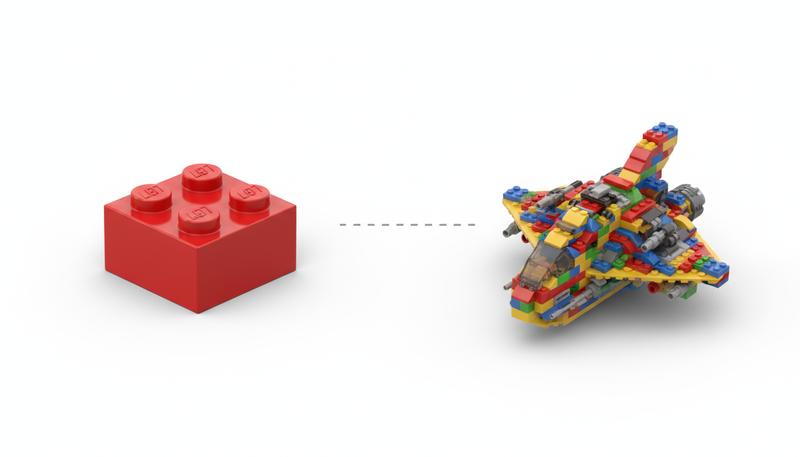
Most note-taking systems treat individual notes as the unit of value. You write a good note, you've done good work. The note is the product. In the Zettelkasten, that's wrong. A perfectly written atomic note sitting in isolation, unlinked to anything, contributes almost nothing to the system. It's a LEGO brick in a sealed bag.
The value is in the network. The zettelkasten.de overview makes this explicit: the Zettelkasten "extends your mind and memory because its structure mimics the way your brain works." Your brain doesn't store memories as isolated facts — it stores them as richly interconnected nodes in a semantic network, where each memory is anchored by its associations. When you can't remember something, you usually can't remember it because it lacks associations — it's poorly networked in your mental graph.
The Zettelkasten externalizes and extends this associative structure. Knowing something "well" in your Zettelkasten means having a note that is densely connected to other notes — one that has been thought about from multiple angles, connected to multiple domains, revisited and refined. A note with twenty meaningful inbound and outbound links represents more actual knowledge than twenty unlinked notes on the same topic.
This is counterintuitive, because we're trained to think of note-taking as a linear accumulation. More notes equals more knowledge. The Zettelkasten replaces that linear model with a network model, where the quantity of connections matters as much as — often more than — the quantity of notes.
Tip: When you're reviewing your Zettelkasten and find a note that has zero links, treat it as unfinished work. Either it hasn't been thought about enough to connect to anything yet, or it belongs to a part of your thinking that's underdeveloped. A linkless note is a prompt to think harder, not a completed piece of knowledge.
When the System Surprises You
The signature experience of a mature Zettelkasten — and the thing practitioners describe most vividly — is being surprised by your own system. You search for something, and you find connections you forgot you made. You sit down to write about one topic and discover that four notes you wrote separately, on different days, about different sources, are actually making the same argument from different angles. You realize you've been building an idea you didn't know you were building.
This is emergence in action. The network noticed something you didn't. The distributed structure of atomic linked notes caught a pattern that your conscious mind — working one book at a time, one article at a time — would have missed.
This experience is also why people get genuinely attached to their Zettelkastens in a way they never get attached to other note-taking systems. It stops feeling like a filing cabinet and starts feeling like a conversation — one where the other party occasionally says something that genuinely catches you off guard.
How the Three Principles Work Together
It's worth taking a moment to see how atomicity, linking, and emergence are not three independent features but one integrated design.
Atomicity makes linking possible. If your notes are comprehensive summaries, the ideas inside them are fused — you can't connect one idea in Note A to one idea in Note B without dragging the entire context of both notes along. Atomic notes have clean edges. They connect precisely.
Linking makes emergence possible. Individual atomic notes, unlinked, are just a flat list. It's the network formed by explicit connections that creates the emergent structure — the clusters, the pathways, the surprising juxtapositions that generate new insight.
Emergence makes the effort worthwhile. Without emergence, the Zettelkasten would be a more labor-intensive version of a regular notes folder. The emergence — the genuine intellectual surprise the system produces — is what makes the additional investment of atomic writing and deliberate linking pay off.
graph LR
    A[Atomicity<br/>One idea per note<br/>Clean edges] --> B[Linking<br/>Explicit connections<br/>Stated relationships]
    B --> C[Emergence<br/>Unplanned outputs<br/>Distributed intelligence]
    C --> D[Original Thought<br/>Arguments, essays, insights<br/>You didn't consciously build]
    A -.->|"Without atomicity,<br/>linking is imprecise"| B
    B -.->|"Without linking,<br/>emergence can't happen"| C
This is the architecture Luhmann built — not as abstract design philosophy but as a practical solution to the problem of thinking at scale over a lifetime. He needed to hold decades of complex, cross-disciplinary thought in a form that remained accessible and combinable. The three principles weren't chosen for elegance; they were chosen because they work. And they work for the same reasons we explored in the cognitive science section: they force elaborative encoding, they create retrieval practice through the linking habit, and they support the kind of spaced, distributed cognition that the human brain is actually built for.
The question now is how to implement them — which is what the next section, on note types, will address. But before moving on, it's worth sitting with the principles themselves long enough for them to shift your intuition about what notes are for. Not storage. Not retrieval. Not organization.
Thinking.
Only visible to you
Sign in to take notes.