How to Ask Questions That Get Real Family Stories
The Art of the Question: How to Ask in Ways That Unlock Real Stories
You've now thought deeply about who you're interviewing and how to create safety for them — about being fully present, honoring their dignity, and recognizing that you're not extracting information but witnessing a person's trust. With that foundation in place, we can talk about the practical tool that makes all of that relational work possible: the question itself.
There's a moment every oral history interviewer knows. You've done your research, you've set up the recorder, you've made the tea. Your grandmother is sitting across from you, and you ask your first question. What happens next depends almost entirely on how you asked it. Ask the wrong kind of question — "Did you like growing up on the farm?" — and you'll get a nod and a "yes" and a polite smile. Ask the right kind — "What do you remember most about the mornings on that farm?" — and you might get twenty minutes about the smell of her mother's bread, the sound of her father's boots on the stairs, the particular quality of light through the kitchen window in February 1943. Same person. Same memory. Completely different question. This is why the question matters so profoundly. It's not just a technique — it's how you honor the presence and permission you've established. The right question says: I'm ready to listen to whatever emerges. I'm not looking for confirmation of what I already think. I want to know what you carry.
The Sin of the Leading Question — and How to Catch Yourself
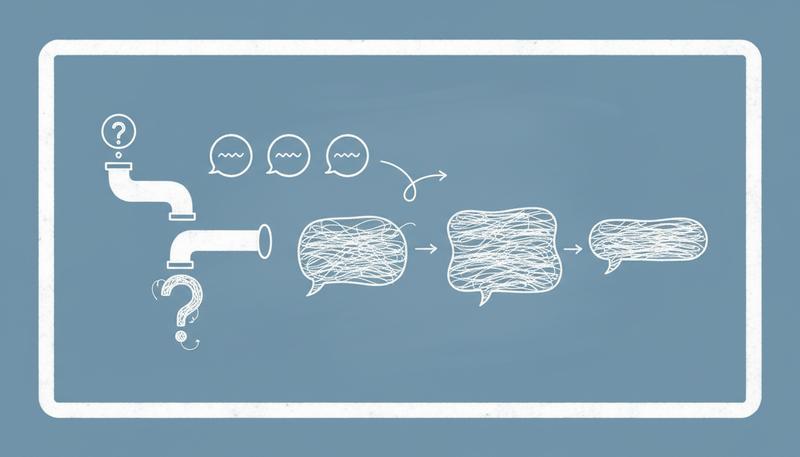
If closed questions are the beginner's mistake, leading questions are the expert's hazard. A leading question embeds an assumption, an emotion, or an interpretation that the narrator may simply accept rather than correct. This contaminates the record. You stop capturing what they remember and start capturing what they think you want to hear.
Leading: "That must have been such a hard time for your family, right?" Neutral: "What was that time like for your family?"
Leading: "You must have been so proud when you got that promotion." Neutral: "What do you remember about getting that promotion?"
Leading: "Did it bother you that your brother got more attention?" Neutral: "How would you describe your relationship with your brother growing up?"
The insidious thing about leading questions is that they often come from love. You're trying to validate your narrator's experience. You're trying to signal empathy. But in doing so, you're handing them a script, and many people — especially older generations raised to be polite and agreeable — will accept that script even if it doesn't quite fit their actual experience. Your grandmother might have been relieved when she left the farm, not nostalgic. But if you ask "You must have loved growing up out there," she'll probably nod and go along with it.
The corrective habit is to notice your own interpretive instincts before you speak. When you catch yourself about to say "that must have been..." or "you must have felt..." — pause. Strip the interpretation out. Hand the emotional territory back to them.
There's a related trap: the compound question. "What was your mother like, and how did she influence your career, and do you think she'd be proud of you?" This isn't one question; it's three. And the narrator will almost always answer only the last one — the one that's freshest in their mind — while the first two, which might have been the most interesting, evaporate. Ask one question at a time. Wait for the answer. Then ask another.
"Tell Me More About That": The Real Skill
Professional interviewers will tell you that the most important words in oral history aren't in any prepared question list. They're the follow-up: Tell me more about that. Can you describe what that was like? What happened next?
This is where the real harvest happens. A narrator's first answer to a question is often a summary — a compressed, socially acceptable version of the memory. Your prepared question gets you to the door. The follow-up gets you inside.
Here's how it works in practice. You ask: "What do you remember about arriving in this country?" Your narrator says: "Oh, it was hard. We didn't speak any English and we didn't have much money." That's a summary. Now you follow up: "Tell me about the first few days. Where did you sleep that first night?" Suddenly you're inside the memory, not above it. You might hear about a cousin's apartment where twelve people shared two rooms, about the smell of unfamiliar food cooking on a strange stove, about a child — your narrator as a child — pressing their face to a window and watching snow for the first time.
That detail about the snow wasn't in anyone's question guide. It arrived because you followed up, because you stayed curious, because you didn't move on to your next prepared question the moment the first answer landed.
[The Smithsonian Folklife and Oral History Interviewing Guide](https://folklife.si.edu/the-smithsonian-folklife-and-oral-history-interviewing-guide/smithsonian) describes family members as "living links in the historical chain, eye witnesses to history" — but those links only reveal themselves when you pull on them gently, again and again, with follow-up questions that say: I want more. I want the real thing.
Some follow-up prompts to keep in your pocket:
- "Tell me more about that."
- "Can you describe what that looked like?"
- "What were you thinking when that happened?"
- "What did it feel like in the moment?"
- "Who else was there?"
- "What happened right before that? Right after?"
- "Can you give me an example?"
- "I want to make sure I understand — can you walk me through that again?"
The last one is particularly valuable. Asking someone to retell something isn't a failure of attention; it's an invitation to go deeper. The second telling is almost always richer than the first.
Silence Is Not Failure
Here is the single hardest discipline in oral history interviewing, and the one most beginners get wrong: after your narrator finishes speaking, wait.
Do not rush in with your next question. Do not fill the pause with an affirmation ("That's amazing!" or "Wow!"). Do not complete their thought or offer them an out. Sit in the silence for a moment — an uncomfortable, seemingly eternal moment — and let it do its work.
Why? Because memory is not a filing cabinet. It's more like sediment at the bottom of a lake, and your question has just stirred it up. The obvious stuff rises first. But if you wait, the things that have been settled for decades start to surface too. The details the narrator didn't know they still remembered. The connection they've never made out loud before. The story they haven't told anyone, ever.
Pause too soon — jump in the moment the first answer finishes — and you get the top layer. Wait a beat, and you might get something that has been sitting untouched for sixty years.
This is uncomfortable. We're socialized to treat silence as a problem to be solved, a void to be filled. In an interview with a family member, the discomfort is doubled — silence with a grandparent feels rude. But experienced oral historians will tell you that some of their best material came in the three seconds after they thought an answer was done. [Roger Eardley-Pryor at UC Berkeley's Oral History Center](https://www.kqed.org/news/12042147/how-to-interview-your-family-members-like-an-oral-historian) emphasizes treating narrators as collaborators — and part of that collaboration is giving them the time and space to remember fully, not just quickly.
A practical technique: after your narrator stops speaking, count silently to five before you respond. Five seconds feels like a year. But at count three, four, five — that's often when they add the thing that matters most.
Chronological vs. Thematic Organization
Before we get to the question frameworks themselves, there's a structural decision you need to make: will you organize your interview chronologically (following the arc of a life from birth to present) or thematically (covering subjects like work, family, faith, and community one at a time)?
Both approaches have real merit, and the choice depends partly on your narrator and partly on your goals.
graph TD
    A[Interview Approach] --> B[Chronological]
    A --> C[Thematic]
    B --> D[Follows life arc: childhood → adulthood → present]
    B --> E[Natural narrative momentum]
    B --> F[Good for first interviews, life history projects]
    C --> G[Organized by subject: work, family, faith, place]
    C --> H[Easier to revisit and compare across interviews]
    C --> I[Good for focused projects or subsequent sessions]
Chronological interviewing has the advantage of narrative momentum. People's lives have arcs, and following that arc helps the narrator locate themselves in time. "Let's start at the very beginning — tell me about where you grew up" is a natural on-ramp. Chronological structure is also forgiving for both interviewer and narrator: when you're not sure what to ask next, you can always say, "So what happened after that?"
The downside is that important themes can get fragmented across the timeline. Your narrator's relationship with religion, for instance, might surface during childhood, then during a crisis in middle age, then again near the end. A purely chronological approach can make it harder to follow those threads.
Thematic interviewing gathers everything about a particular subject in one place. This can produce more cohesive material on any given topic, and it allows you to go deep on subjects that matter most to your family or your project.
The downside is that it requires more preparation and more active steering. You need to bring the narrator back to the subject at hand, which can feel artificial.
For most family oral history projects, especially first interviews, chronological is the better starting point. It's more intuitive for narrators, it reduces the amount of steering you need to do, and it respects the shape of a human life. Within that chronological arc, you can still ask thematic probes — you can spend twenty minutes on work during the period of early adulthood, for instance — without abandoning the larger structure.
Question Frameworks by Life Phase
What follows is a set of question frameworks organized by life phase. These are starting points, not scripts. No question guide can anticipate what your particular narrator will tell you, and the best interviews are ones where you abandon the guide entirely because something more interesting appeared. But a strong question list gives you confidence — a ladder to lean against the wall while you climb.
Childhood and Early Life
- Where were you born, and what was that place like?
- Describe the home you grew up in — walk me through it room by room.
- What are your earliest memories?
- Tell me about your mother and your father — what were they like as people?
- What did your parents do for work? What did they tell you about their own lives?
- Were you close to your grandparents? What do you remember about them?
- How many siblings did you have, and what was your place in the family?
- What were your responsibilities at home growing up?
- What did your family eat? Who cooked? Are there foods from your childhood you still make?
- What did you do for fun? What games did you play? What did children do in your neighborhood?
- What was school like? Who were your teachers? Were you a good student?
- What were summers like? Did your family take vacations?
- Was there a moment in your childhood that changed things — something that made you see the world differently?
- What was your family's relationship to religion or faith growing up?
- What did you know about your family's history — where you came from — before you could find out for yourself?
Adolescence and Young Adulthood
- What were you like as a teenager?
- Who were your closest friends growing up? What do you remember about them?
- Did you have a first love? Tell me about that.
- What did you want to be when you grew up — did it change over time?
- Did you work as a young person? What was your first job?
- How did your relationship with your parents change as you got older?
- Were there things you wanted to do that your parents wouldn't allow?
- What was happening in the world when you were young — and how aware were you of it?
- Did you go to college, or join the military, or go straight to work? Walk me through how you made that decision.
- What was the hardest part of becoming an adult?
Work and Career
- Walk me through your working life — what were the main chapters?
- What drew you to the work you did?
- Tell me about someone who mentored you or who you learned from.
- What did you have to figure out the hard way?
- Was there a job or a project you're most proud of?
- Were there times when your career didn't go the way you hoped?
- How did work shape who you are? Or — did who you are shape the work?
- What would you tell someone just starting out in your field?
- Did you ever want to do something completely different?
- How did you balance work and the rest of your life?
Love, Partnership, and Family
- How did you meet your partner? Tell me the story.
- What was the courtship like?
- What made you decide this was the person?
- What do you wish you'd known before you got married?
- How did having children change you?
- What's something you got right as a parent? What would you do differently?
- Tell me about a moment when your family came through for each other.
- Were there rifts in the family — things that drove people apart?
- What traditions did you create or keep alive in your own family?
- What do you hope your children or grandchildren carry forward from you?
Historical Events and the World
This is one of the most valuable categories, and one that families most often neglect. Your narrator's personal experience of major historical events is irreplaceable — it's what no textbook can provide.
- Where were you when [a significant historical event] happened? What do you remember about that day?
- How did [war, recession, pandemic, political upheaval] affect your family directly?
- What did people around you think and feel during [a specific period]?
- What do you think history gets wrong or leaves out about that time?
- How did things change after [event]? What was life like before and after?
- Did you ever feel like you were living through history while it was happening?
- Were there things you saw that you think people today would find hard to believe?
The Smithsonian Institution's guidelines note that the well-prepared interviewer uses the interview "to seek new information, clarification, or new interpretation of a historical event" — the personal dimension that documents simply can't provide. This is where family oral history makes its most unique contribution.
Values, Faith, and Meaning
- What do you believe in — about how to live, about what matters?
- Has your faith or spirituality changed over the course of your life?
- What's the best piece of advice you ever received? Who gave it?
- What's the thing you most want to pass down — not a possession, but an idea or a way of being?
- What's something you've changed your mind about completely?
- Looking back, is there anything you regret? Anything you'd do differently?
- What are you most proud of in your life?
- What do you think has been your greatest contribution — to your family, your community, the world?
- How do you want to be remembered?
The Question You Should Almost Always Ask
Near the end of every interview, there's one question worth asking in some form: "What do you want people to remember?"
You can phrase it different ways: "If you could make sure your grandchildren knew one thing about your life, what would it be?" Or: "Is there something you've never been asked but always wanted to talk about?" Or simply: "What have we not covered that feels important to you?"
This question does several things at once. It restores full agency to the narrator at the moment when the interview has been, structurally, about your questions and your agenda. It invites material you never would have thought to ask about. And it often produces the most eloquent, considered, emotionally resonant content of the entire session — because the narrator has been thinking about it their whole life and simply hasn't had anyone ask.
Sometimes the answer is practical. "I want people to know how hard your great-grandfather worked." Sometimes it's philosophical. "I want them to know that most things that seem important at the time — aren't." Sometimes it opens an entirely new door. "I've never told anyone about what happened in 1962."
Whatever it is, you want it on the record.
Organizing Your Question List
A practical note on preparation: your question list is a safety net, not a script. Have it with you, but don't read from it. The goal is to have internalized the major themes so thoroughly that you can navigate the conversation naturally, deploying prepared questions when you need to redirect or go deeper, and departing from them freely when the narrator takes you somewhere better.
A good question list for a two-hour interview contains roughly 20-30 questions organized by phase or theme — far more than you'll actually ask, because the best interviews spend more time on fewer questions. If you get through fifteen questions but the answers were deep and rich and specific, you've done excellent work. If you get through all thirty but every answer was a sentence long, you've conducted an intake form, not an interview.
Write your questions in advance. Then read them again and cut the closed ones. Then read again and cut the compound ones. Then reorganize them into a logical arc. Then go into the interview ready to throw the whole list out the moment something better appears.
Handling the Narrator Who Gives Short Answers
Some narrators are naturally expansive storytellers. You ask one question and forty-five minutes later they're still going, and it's magnificent. But others — especially in the early part of an interview, or with more reserved personalities — give clipped, minimal answers, and the silence that follows can feel discouraging.
If your narrator is giving short answers, here's what's usually happening: they're not sure what you want, they're not sure the detail they could give is interesting to you, or they're not yet comfortable enough to open up. The remedy is not to ask more or faster questions. It's to create more safety and more permission.
A few techniques:
Reflect back what you heard. "You mentioned that your family moved three times in four years. That sounds like it would have been disruptive." This shows you were listening and signals that detail matters. It also creates a natural opening for them to go further — but without directly asking another question.
Make your curiosity explicit. "I want to understand this as specifically as you can tell me. Not the big picture — the actual moment, the actual day." This gives people permission to share detail they might assume is boring or irrelevant.
Ask about objects, places, and senses. Abstract questions can be hard to answer. "What was it like?" is harder for some people than "What did that room smell like?" or "What did you wear on that day?" Concrete sensory anchors unlock memory that more abstract questions leave sealed.
Try a different entry point. If "Tell me about your childhood home" gets a shrug, try "Describe the view from your bedroom window." The specific often unlocks the general.
Be patient with early reticence. The first twenty minutes of almost any interview are the least rich. People are warming up, finding their footing, testing whether this is a safe space. Stay calm, ask gentle follow-ups, and trust that if you create the right conditions, the stories will come.
Handling the Narrator Who Never Stops
The opposite challenge is its own art form. Some narrators — bless them — are so full of stories, so delighted to have an audience, so unwilling to let a moment pass without embellishment, that after ninety minutes you've only covered three questions from your list, and you have a sense that the interview could continue forever with no particular destination in sight.
The generous assessment: you have a wonderful narrator and a rich archive is being created. The honest assessment: you also have a job to do, and there are topics you need to cover before the end of the session.
Gentle redirection is a skill worth developing. The key is to acknowledge what the narrator just said — really acknowledge it, not dismiss it — and then steer. "That story about the factory is incredible — I want to come back to that later. Before we move on, I want to make sure we talk about the years you spent in [place]." The "I want to come back to that" is important: it's a promise, and it respects the narrator while creating movement.
Other redirection techniques:
- Use their words as a bridge. If they just finished a story about their mother's cooking, say: "You mentioned your mother — I want to ask you about your relationship with her more broadly..."
- Name the transition explicitly. "We've been talking about your early years, and I want to shift us forward in time — to when you first moved to the city."
- Schedule a follow-up. If a narrator has more material than one session can hold, the best answer is simply: "There's so much here — could we meet again? I want to make sure I capture everything."
The Smithsonian's oral history guidelines recommend closing each session by asking a "deflationary" question — something that invites reflection and assessment rather than continuing the narrative — and planning sessions so they conclude before the narrator becomes fatigued. This is wise not just for the narrator but for the interviewer too. Two hours of genuine deep listening is exhausting work. Better two rich sessions than one that runs too long and ends on a note of mutual depletion.
The Discipline of Not Finishing Their Sentences
A final, specific trap: the impulse to complete a narrator's sentence when they're searching for a word.
Your grandmother pauses, searching for the name of the street, the name of the neighbor, the right word for how something felt. You know it — or you think you do — and it's right there on the tip of your tongue. The silence stretches. You want to help.
Don't.
The word you supply might be wrong. It might be close but not quite right — and they'll accept it anyway, because you offered it and they're tired of searching. And even if you're right, you've taken away the moment of retrieval, which is its own small piece of the interview. That searching pause — "It was... I don't know how to describe it... it was like waiting for something that never came" — is sometimes more eloquent than the word they were looking for in the first place.
Let them find it. Wait. If they genuinely can't, let them move on in their own words. The best thing you can do in that moment is nod, be present, and resist.
This patience — in follow-up, in silence, in resisting the impulse to lead or complete or fill — is ultimately what the art of the question is about. It's not about having better questions than anyone else. It's about creating enough space that the person across the table can finally tell you something true.
As Nicole Wong found when interviewing her parents during their Mahjong games — an approach she described to KQED as "a really meaningful way to talk to my parents" in a way that felt different from ordinary conversation — the best interviews often feel less like interviews and more like finally, genuinely listening. Your questions are just the structure that makes that listening possible.
Only visible to you
Sign in to take notes.